

Beyond the Content Explosion: What 17 ...
Blogs
Here is the uncomfortable truth about AI in learning today: ...

The CV screens for experience. The technical assessment screens for proficiency.
But neither one answers the question that actually predicts whether someone will succeed long-term: can they communicate clearly under pressure, adapt when plans change, and lead others through ambiguity?
Durable skills in the workplace have moved from “nice to have” to the primary differentiator in hiring and promotion decisions. This article covers how organizations actually assess them — and why the methods matter as much as the skills themselves.
Durable skills are the transferable, human-centric capabilities that remain valuable regardless of which tools are in use, which industry someone works in, or how their role evolves.
Communication, critical thinking, adaptability, collaboration, emotional intelligence, leadership, creativity, resilience, problem-solving, digital literacy — these are the competencies that don’t expire.
LinkedIn data shows that 92% of executives say these human skills are more critical than ever, and that workers with strong durable skills are promoted approximately 8% faster than peers with equivalent technical credentials.
Analysis of 80+ million U.S. job postings shows the top five durable skills are requested nearly four times more often than the top five hard skills. The market is pricing these capabilities as primary, not supplementary.
For learning & development and HR teams, the practical implication is that development programs that don’t explicitly build and measure durable skills create a gap between what they produce and what the business actually needs.
Assessment methods have evolved significantly — partly because hiring managers have learned that interviews alone don’t reliably predict durable skills performance, and partly because better tools now exist.
Here’s how the leading approaches compare:
|
Method |
What it involves |
What it actually reveals |
|
Behavioral interviews |
"Tell me about a time when you…" — candidates describe past experiences demonstrating specific capabilities |
How someone has actually communicated, adapted, or led under real pressure — not how they say they would |
|
Situational questions |
Hypothetical scenarios: "What would you do if a project changed course mid-delivery?" |
Problem-solving approach, adaptability mindset, and judgment under ambiguity |
|
Group exercises and role-plays |
Candidates work through a case study, simulated meeting, or group challenge together |
Real-time communication, collaboration dynamics, and leadership behavior in a group context |
|
Simulation-based assessment |
Candidates work through branching scenarios that mirror real workplace situations and decision points |
Actual decision-making behavior, adaptability under pressure, and communication style — producing objective, verified performance data |
|
Work samples and skills tests |
Role-relevant tasks performed during the hiring process itself — a written communication, a prioritization exercise, a stakeholder briefing |
Applied competence in realistic conditions, not just self-reported capability |
The shift toward simulation-based assessment matters because it closes the gap between what candidates claim and what they can demonstrate.
Research on AI in assessment confirms that AI systems can produce more fine-grained, objective measurement of learner and candidate performance than traditional interview techniques — generating verified skills data rather than interviewer impressions.
Technical skills often serve as the initial screen — the baseline qualification that gets someone into consideration. But among candidates who clear that bar, it’s durable skills that determine who gets hired and who gets promoted.
For recent graduates, this means the internship experience and technical coursework get attention in the first review.
The behavioral interview — how they navigated a team conflict, how they adapted when a project changed direction, how they communicated a complex idea to a non-technical audience — determines the final decision.
89% of hiring failures are attributed to missing durable skills, not technical ability, according to research summarized by Vervoe. Employers know this, which is why many now explicitly test for adaptability, communication, and problem-solving during the hiring process rather than assuming they’ll develop post-hire.
Training simulation software is increasingly used to build these skills during onboarding and early career development, giving new hires the realistic practice they need to close the gap between academic preparation and job-ready performance.
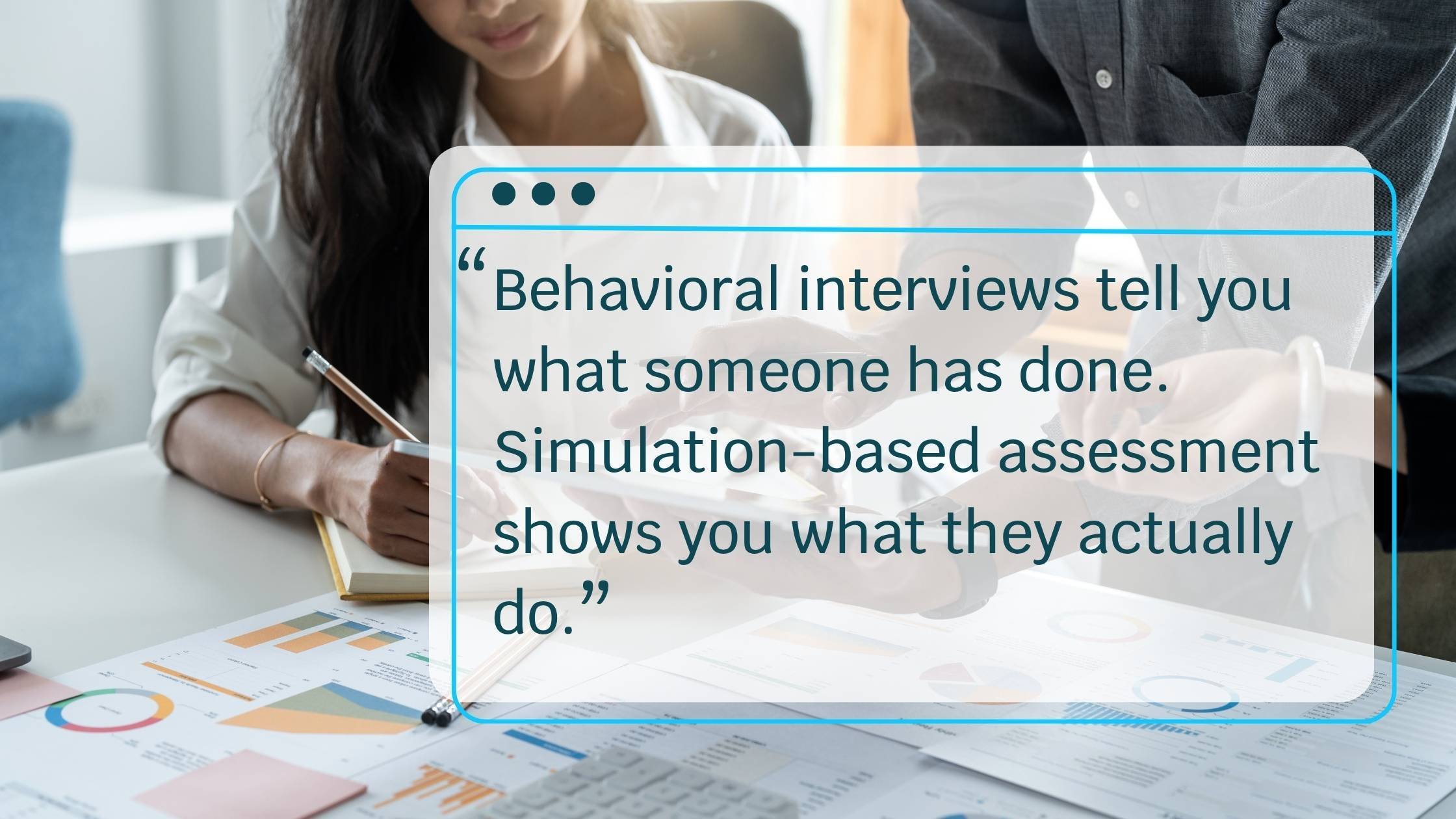
Behavioral interviews tell you what someone has done. Simulation-based assessment shows you what they actually do. And the trend toward these skills measurements is clear and accelerating.
As automation handles more routine cognitive tasks, the capabilities that remain distinctively human — judgment, communication, adaptability, emotional intelligence — become more valuable, not less.
The WEF Future of Jobs 2025 report identifies analytical thinking, creative thinking, resilience, flexibility, and leadership as the top core skills employers require through 2030. These are durable capabilities, not technical credentials.
LinkedIn’s 2026 labor market report found that jobs requiring AI literacy and human-centric capabilities such as adaptability and critical thinking are surging, with employers emphasizing a blend of the two.
Technical skills remain essential as the entry threshold for most roles. But differentiation — who gets hired, who advances, who leads — is increasingly determined by the durable capabilities that don’t expire when the next tool launches.
Professional development assessment data from simulation-based programs gives organizations the objective baseline they need: not self-reported competency or manager ratings, but demonstrated performance in realistic scenarios that predicts how someone will actually show up on the job.
Assessing durable skills in hiring is one half of the equation. Building them in existing employees is the other.
Skillwell combines AI-powered adaptive learning with immersive simulation to both measure and develop durable skills — giving organizations the verified performance data they need to make better talent decisions and build the capability that drives results.
Behavioral interviews: structured “tell me about a time when…” questions that reveal how candidates have actually communicated, adapted, or led in past situations
Situational questions: hypothetical scenarios that reveal problem-solving approach and judgment under ambiguity
Group exercises and role-plays: real-time observation of communication, collaboration, and leadership dynamics
Simulation-based assessment: branching scenarios that generate objective, verified performance data rather than interviewer impressions
Technical skills typically serve as the initial screen — the baseline qualification to enter consideration
Among candidates who clear that bar, durable skills determine the final hiring and advancement decision
89% of hiring failures are attributed to missing durable skills, not technical ability
92% of executives say human skills are more critical than ever as AI reshapes routine technical work
Communication (top of virtually every employer priority list), critical thinking, adaptability, and collaboration
Problem-solving, leadership, and emotional intelligence round out the top seven across industries
7 of the 10 most requested skills in U.S. job postings are durable skills; the top five are requested ~4x more often than the top five hard skills
WEF identifies analytical thinking, resilience, and creative thinking as top core skills for 2030
Here is the uncomfortable truth about AI in learning today: ...
Adaptive learning promises personalized pathways and measurable gains. Seasoned buyers know no technology arrives without ...
Remote and hybrid higher education changed what "hands-on" can mean.
Here is the uncomfortable truth about AI in learning today: ...
Adaptive learning promises personalized pathways and measurable gains. Seasoned buyers know no technology arrives without ...
Remote and hybrid higher education changed what "hands-on" can mean.