

Beyond the Content Explosion: What 17 ...
Blogs
Here is the uncomfortable truth about AI in learning today: ...
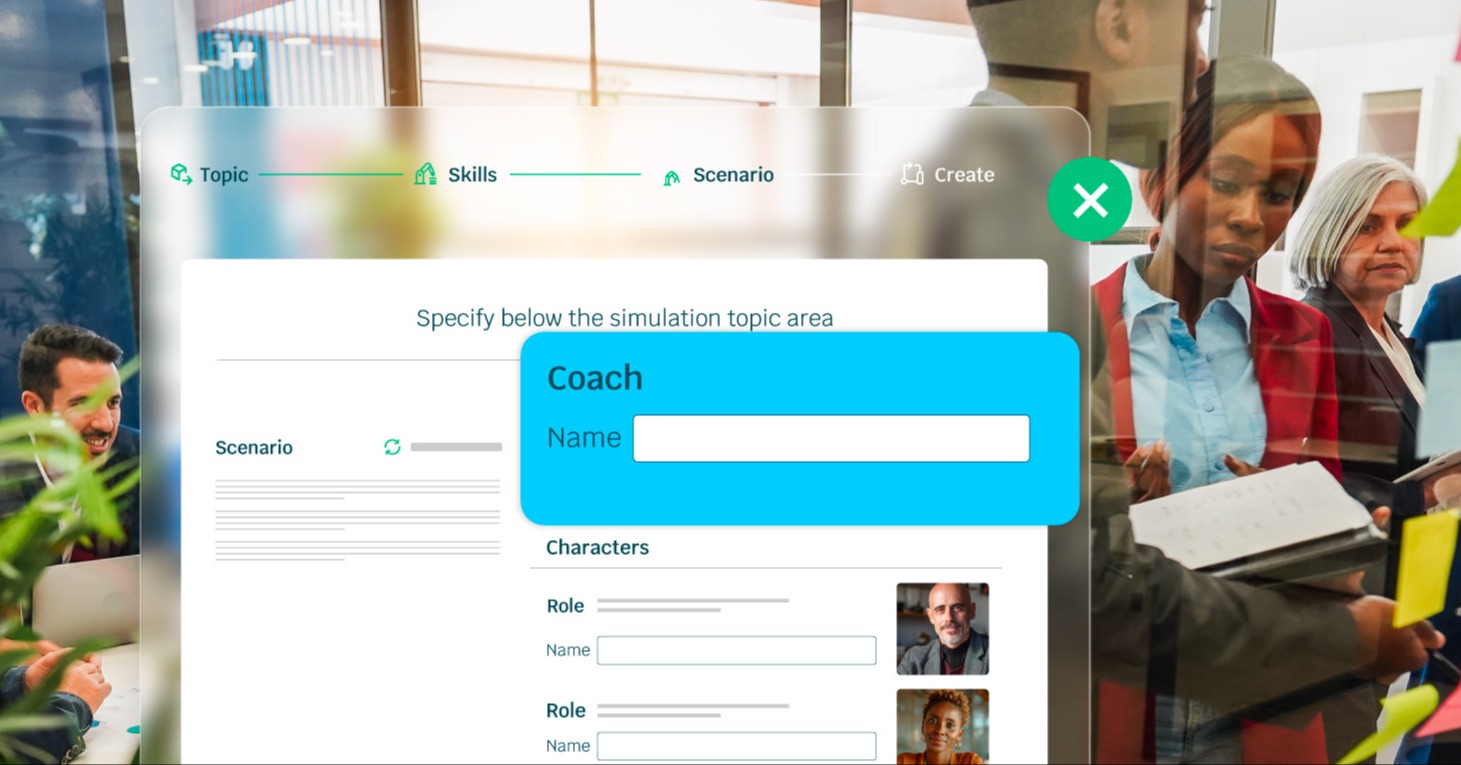
With businesses competing for market edge and a rising talent war, implementing effective training solutions has never been more important. But how can you help ensure that your training is meeting expectations while still engaging your teams?
Enter Training Simulation Software—a revolutionary approach to training. Training simulation software combines immersive experiences with real-world scenarios, all with the goal of enhancing learning outcomes.
Training simulation software can be incredibly effective when incorporated alongside your company’s current training initiatives, and can even spur creativity into new ways of equipping your people. But how exactly does training simulation software work?
Let’s explore the various dimensions of training simulation software, its applications, and how it can upgrade your training programs–no matter your industry.
Training simulation software is designed to create realistic training environments where users can practice skills in a controlled setting.
By leveraging advanced technology, this new training software can build and implement immersive experiences that mimic real-life situations. By engaging learners in a controlled, real-life experience, they are encouraged to react actively rather than passively absorbing information.

The technology behind simulation software typically incorporates existing tools and innovative technology. The rise of artificial intelligence (AI), virtual reality (VR), and data analytics allows for tools that help both trainees learn more effectively, while helping trainers collect actionable data.
Training simulation software equips you with capabilities to build dynamic training modules that adapt to the learner's progress, so you can fine-tune each to create personalized learning pathways.
This adaptability and personalization have been shown to be crucial for enhancing retention and improving skill application in real-world scenarios.
Plus, the AI-powered adaptive learning aspect allows for the generation of branching simulations in minutes, requiring no technical expertise.
This means organizations can quickly deploy tailored training solutions that meet their specific needs without the lengthy development cycles typically associated with traditional training methods.
Training simulations for sales teams, leadership, and even compliance training are some of the most effective applications of this new technology.
Simulations can help leaders hone their skills in high-stakes scenarios and allow sales professionals to practice their pitches and refine their techniques in a risk-free environment.
The software can be applied in various scenarios, including:
Best of all, when you partner with training software providers that specialize in simulation, your organization can tailor their training to meet specific needs:
For instance, the adaptive assessment-driven onboarding process creates personalized 30‑60‑90 day journeys that help guide new employees through essential learning objectives–which can significantly reduce training seat time and improve skills maturity.
The integration of skills data analytics further enhances the training experience by allowing organizations to track progress and adjust training pathways based on real-time performance metrics.
This data-driven approach not only builds a more competent workforce but also helps organizations meet compliance burdens effectively.
In addition, day-in-the-life scenarios created through these simulations provide learners with immersive, emotional workplace experiences that mirror their actual roles.
This method not only engages learners but also fosters a deeper understanding of their responsibilities. When done properly, these can help lead to a more skilled and much more confident workforce.
By leveraging the unique combination of AI-powered adaptive learning with immersive simulation training, organizations can ensure their workforce is not only trained effectively but is also equipped to handle the complexities of modern business challenges.
The result? A transformative training program that not only meets the immediate needs of the organization today but also positions it for long-term success tomorrow.
The global market for virtual training and simulation is experiencing significant growth.
Projections estimate a potential valuation of $844.2 billion by 2030, growing at a compound annual growth rate (CAGR) of 11.1% from 2024 to 2030.
This expansion is driven by technological advancements, which are creating a rising demand for experiential learning.
In the United States alone, the simulation software market is projected to reach approximately $21.82 billion by 2034, reflecting a CAGR of 14.05% from 2025 to 2034.
This growth underscores the increasing adoption of simulation-based training solutions across various sectors, including healthcare, defense, and manufacturing.
The integration of AI in training simulations is enhancing the personalization and effectiveness of learning experiences.
A great example is in data science education. AI-driven formative assessment and adaptive learning have been evaluated using an LLM-powered virtual teaching assistant, showing the potential of AI to provide dialogic support, interoperable analytics, and integrity-aware assessment for workforce preparation.
Beyond AI-enabled assessments, AI agents are now being utilized to create adaptive educational simulations. These unique 1-1 experiences offer students the opportunity to practice skills in scenarios with AI-generated mentors, role-players, and instructor-facing evaluators.
This approach significantly lowers the barriers to creating effective, engaging simulations, opening up new possibilities for experiential learning at scale.
In the healthcare sector, AI-powered simulation platforms like MedSimAI are enabling deliberate practice, self-regulated learning, and automated assessment through interactive patient encounters. These platforms address key limitations of traditional simulation-based training, making high-quality clinical education more accessible and scalable.
The adoption of virtual reality (VR) in training simulations is also on the rise. The global VR training simulator software market is projected to grow from $0.58 billion in 2025 to $1.7 billion by 2034, at an estimated CAGR of 12.61% from 2025 to 2034.
This growth is driven by the increasing use of VR technology for training and development, as well as the demand for affordable solutions that can be applied in multiple locations.
By leveraging advanced technologies such as AI and VR, these solutions provide immersive, personalized, and scalable training experiences that enhance learning outcomes and prepare the workforce for the challenges of the modern business landscape.
Training simulation software offers significant advantages across various departments within an organization:
The impact of this software on employee engagement and skill development is profound. By offering immersive experiences, organizations can foster a culture of continuous learning and improvement, leading to higher employee satisfaction and retention.
According to the U.S. Department of Education, educators believed that students were more engaged when offered hands-on, simulated instruction.
Plus, the use of AI-powered adaptive learning allows for immediate personalization of learning pathways, helping employees engage with content that is most relevant to their roles and responsibilities.
This personalized approach not only enhances engagement but also drives skill maturity across departments, leading to a more competent workforce.
When selecting the best simulation software online, you want to make sure you’re investing in tools and technology that meet your needs today–and can grow with you tomorrow.
There are several key features and functionalities you’ll want to look for:
Look for branching simulations that can be generated in minutes via AI, requiring no technical expertise. This feature enables organizations to create diverse training scenarios that reflect real-world challenges, enhancing the relevance of training experiences.
The ability to provide audit-ready, evidence-based records proving competence is also vital, particularly for industries that require compliance and regulatory adherence.
One of the key advantages of training simulation software is its ability to track and report user performance.
This software typically includes metrics and analytics that allow organizations to assess the effectiveness of their training programs. Common metrics include:
Why focus on these specific metrics? The right KPIs can help you determine if the training is actually leading to long-term success.
For example, the verified skills data captured during simulations can be utilized to personalize learning pathways instantly, allowing organizations to adapt training based on individual performance and needs.
This data-driven approach also supports the development of role-based onboarding journeys, ensuring that new hires are equipped with the necessary skills to succeed from day one.
Going further, incorporating adaptive assessment-driven onboarding can create personalized 30–60–90-day pathways tailored to each employee's learning objectives.
Imagine creating a structured approach that helps new employees acclimate more quickly–reducing the overall compliance burden and improving readiness for high-stakes interactions.
The integration of skills data analytics further empowers organizations to identify skill gaps and opportunities for growth, allowing for targeted training interventions. By continuously monitoring these metrics, companies can ensure that their training programs remain relevant and impactful, ultimately leading to a more skilled and adaptable workforce.
The training simulation software market has experienced significant growth, and there’s an increasingly large number of companies looking to cash in on the growth. The key is knowing which company to trust when it comes to the best training simulation software.
There are several leading training simulation companies that have been recognized for their innovative approaches and comprehensive solutions. Key players in the market include:
Each of these companies provides unique features and strengths, making it essential to evaluate them based on your specific training needs and objectives.
For instance, Skillwell stands out with its unique combination of AI-powered adaptive learning and immersive simulation training, allowing organizations to create highly personalized learning pathways that adapt in real-time based on learner performance.
A diverse range of industries benefits from training simulation software, including:
Successful implementations in these industries demonstrate the versatility and effectiveness of training simulations in enhancing workforce capabilities.
For instance, in healthcare, Skillwell utilizes day-in-the-life scenarios to prepare professionals for high-stakes patient conversations. These help healthcare teams stay equipped with the necessary skills before encountering real-world situations–boosting confidence and potentially improving patient outcomes.
To be effective, simulation software requires a combination of creativity and technical expertise. While there are tools on the market that aim to help implement simulation experiences more naturally, you’ll still want the help of a trained partner to build your training simulations to fit your goals.
Additionally, many vendors provide training resources, including tutorials and customer support, to assist users in maximizing the software's potential.
With Skillwell, for instance, the ability to generate branching simulations in minutes via AI means that even those without technical backgrounds can create complex training scenarios tailored to their organization's needs.
This democratization of technology allows for rapid deployment of training programs that can be adjusted based on real-time feedback and learner progress.
Modern training simulation software is now integrating AI in incredibly powerful ways. Rather than just creating a simulation experience, AI-powered platforms can now analyze user data in real-time. This allows for more personalized learning experiences that adapt to individual progress.
The integration of AI into training simulation software enables:
As technology evolves, the potential for AI-driven solutions in training simulations is vast, promising even more innovative approaches to workforce development.
Skillwell enhances this experience by offering adaptive assessment-driven onboarding that creates personalized 30–60–90-day journeys for new hires. Now your best talent can meet critical learning objectives more quickly, while easing the compliance burden often faced in regulated industries.
Plus, the verified skills data captured during simulations personalizes pathways instantly and provides audit-ready, evidence-based records proving competence. This capability is especially valuable for organizations in sectors like healthcare and finance, where demonstrating compliance and skill proficiency is paramount.
Finding the right training simulation software requires knowing the needs of your teams and the capabilities of a training provider.
With Skillwell, your organization can gain access to a powerful suite of tools designed to streamline the learning process and improve overall skill maturity across your workforce.
Unlock the full potential of your training programs with cutting-edge simulation software that enhances learning and boosts retention. Take the first step towards elevating your team's skills with Skillwell today!
Take A Tour of Skillwell’s Capabilities Now
Here is the uncomfortable truth about AI in learning today: ...
Adaptive learning promises personalized pathways and measurable gains. Seasoned buyers know no technology arrives without ...
Remote and hybrid higher education changed what "hands-on" can mean.
Here is the uncomfortable truth about AI in learning today: ...
Adaptive learning promises personalized pathways and measurable gains. Seasoned buyers know no technology arrives without ...
Remote and hybrid higher education changed what "hands-on" can mean.