

Beyond the Content Explosion: What 17 ...
Blogs
Here is the uncomfortable truth about AI in learning today: ...
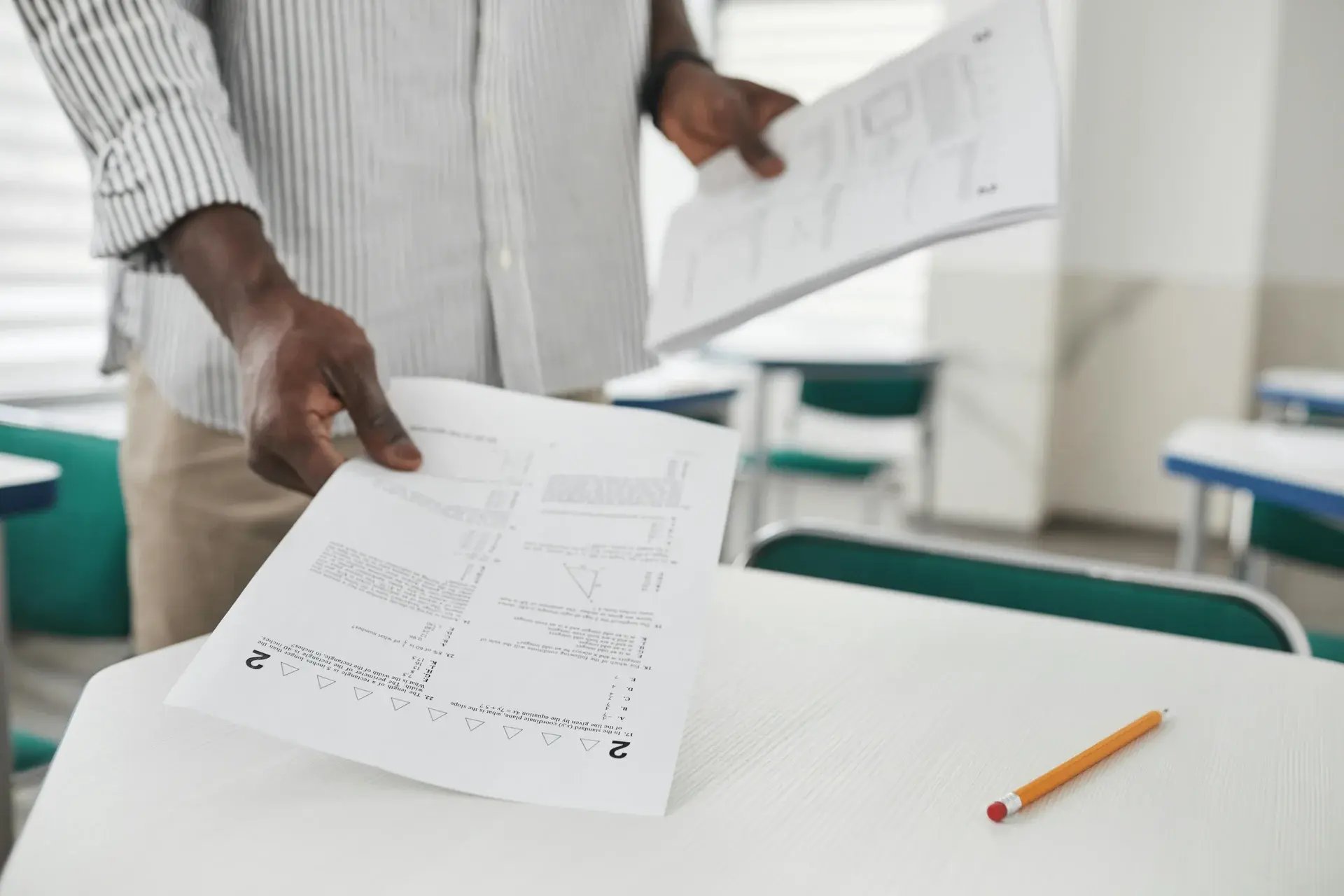
The problem with assessing durable skills in education isn’t that it’s impossible. It’s that most educational institutions are still using tools designed for measuring knowledge recall — and applying them to capabilities that only show up under realistic conditions.
Durable skills assessment requires a different approach: one that captures what learners actually do, not what they know how to describe.
Let’s look at why assessment methods matter, what works, and how learning and development teams and educators can build assessment into development rather than treating it as a separate event.
The shift is driven by what’s happening in the labor market. The WEF Future of Jobs 2025 report ranks analytical thinking, creative thinking, resilience, and leadership as the top core skills employers require — all durable capabilities.
As AI and automation handle more routine cognitive work, the human capabilities that remain are the ones that matter most.
The data from job postings reinforces this. America Succeeds and Lightcast research found that 76% of U.S. job postings request at least one durable skill, nearly half request three or more, and the top durable skills are requested nearly five times more often than the top hard skills.
The Aspen Institute’s employer survey is direct: durable skills play a central role in hiring decisions for early-career talent, and employers see a significant gap between what education systems are producing and what they need. That gap isn’t technical. It’s human.
For educational institutions and L&D teams, that means assessment frameworks designed only around subject-specific knowledge are systematically missing what employers most value. The shift toward durable skills isn’t a trend — it’s a structural realignment of what workforce preparation requires.
Effective durable skills assessment captures demonstrated behavior, not self-reported competency or knowledge recall. Here’s how the main methods compare:
|
Method |
What it captures |
Best used for |
|
Simulation-based assessment |
Actual decision-making behavior in realistic workplace scenarios — not knowledge recall |
Communication, critical thinking, adaptability, leadership; produces objective, audit-ready verified skills data |
|
Rubric-based observation |
Behavioral indicators against defined performance levels during group work, presentations, or projects |
Collaboration, communication, leadership; most effective when rubrics define observable behaviors, not just labels |
|
360-degree feedback |
How peers, managers, and instructors experience working with the learner — the interpersonal dimension |
Leadership, emotional intelligence, communication; adds the social context that simulations alone don’t fully capture |
|
Portfolio evidence |
Demonstrated performance over time across multiple activities and contexts |
Showing trajectory and growth; provides longitudinal record useful for accreditation and compliance |
|
Adaptive platform data |
Granular performance data captured automatically as learners move through personalized pathways |
All skills; particularly valuable for tracking development at scale across large learner populations |
A systematic review of AI in education concludes that AI systems can tailor instruction in real time and provide more robust, personalized measurement of learner performance than traditional one-size-fits-all assessments.
When paired with simulation-based activities, adaptive platforms generate verified skills data — objective, audit-ready evidence that goes beyond completion records to capture actual demonstrated competence.
The critical design principle: assessment and development should happen in the same activity. A simulation that places a learner in a realistic scenario is simultaneously building the skill and producing the performance data that measures it. That integration — practice and assessment in one — is what makes durable skills development both efficient and verifiable.
The most effective assessment of durable skills isn’t a test you give after development. It’s the data you capture during it.
The design principle is straightforward: create activities where the skill is required, not just referenced. Learners develop communication by communicating in realistic conditions with feedback — not by reading about what good communication looks like.
Branching simulations are one of the most powerful tools for this. They place learners inside complex, realistic scenarios where their choices drive outcomes — building judgment and capability through experience rather than exposure.
UCF’s research on simulation in education links simulation to increased engagement, better skill acquisition, and improved transfer to real-world performance.
Project-based learning creates similar conditions at scale. Groups working toward a shared deliverable must communicate, negotiate, and problem-solve collaboratively — exactly the context where durable skills develop fastest.
Building assessment rubrics into these activities — with specific, observable behavioral indicators rather than abstract labels — makes the development visible and documentable.
For organizations deploying durable skills programs at scale, adaptive learning platforms personalize the development pathway for each learner based on demonstrated performance.
Rather than everyone following the same sequence, learners advance through content calibrated to their actual gaps — making training both faster and more effective.
Curriculum standards are built around measurable academic outcomes, and what doesn’t get tested tends not to get taught. Integrating durable skills requires making them explicit, not just aspirational.
The assessment problem follows the same logic. Without clear rubrics that define what “proficient collaboration” or “advanced critical thinking” looks like in observable behavior, assessment defaults to subjectivity.
America Succeeds research notes that while employers highly value these skills, there’s no consistent framework for measuring them — which is what’s driving demand for validated assessment tools and rubrics across K–12 and higher education.
The organizations and schools that navigate this most effectively share a common approach: they build assessment infrastructure first — defining what each skill looks like at different proficiency levels, identifying the activities that make those behaviors observable, and documenting performance consistently over time. When that infrastructure exists, durable skills development becomes as trackable and reportable as any academic outcome.
For L&D teams in organizations, professional development assessment frameworks that include simulation-based evidence, 360-degree feedback, and adaptive platform data provide the most complete and defensible picture of where capability actually stands.
Skillwell combines AI-powered adaptive learning with immersive simulation to build durable skills through realistic practice — and capture the verified performance data that makes those capabilities measurable and documentable.
Simulation-based assessment: captures actual decision-making behavior in realistic scenarios — not knowledge recall
Rubric-based observation: behavioral indicators at defined proficiency levels during group work or presentations
360-degree feedback: how peers, managers, and instructors experience working with the learner
Portfolio evidence and adaptive platform data provide longitudinal, audit-ready records of competency development
They show up in behavior under realistic conditions — not in responses to structured test questions
Without shared rubrics, assessment is subjective; two evaluators may reach different conclusions from the same observation
Traditional tools measure what learners know; durable skills require measuring what they actually do
AI-powered simulation platforms close this gap by generating objective performance data during realistic practice
The most effective programs make them the same activity: a simulation builds the skill and produces the performance data simultaneously
Separating them — training first, then a separate assessment — is less efficient and less accurate than integrated approaches
Verified skills data from simulation performance provides objective, audit-ready evidence rather than self-reported or manager-rated competency
Adaptive platforms track development over time, showing where growth is happening and where gaps remain
Here is the uncomfortable truth about AI in learning today: ...
Adaptive learning promises personalized pathways and measurable gains. Seasoned buyers know no technology arrives without ...
Remote and hybrid higher education changed what "hands-on" can mean.
Here is the uncomfortable truth about AI in learning today: ...
Adaptive learning promises personalized pathways and measurable gains. Seasoned buyers know no technology arrives without ...
Remote and hybrid higher education changed what "hands-on" can mean.