

Beyond the Content Explosion: What 17 ...
Blogs
Here is the uncomfortable truth about AI in learning today: ...
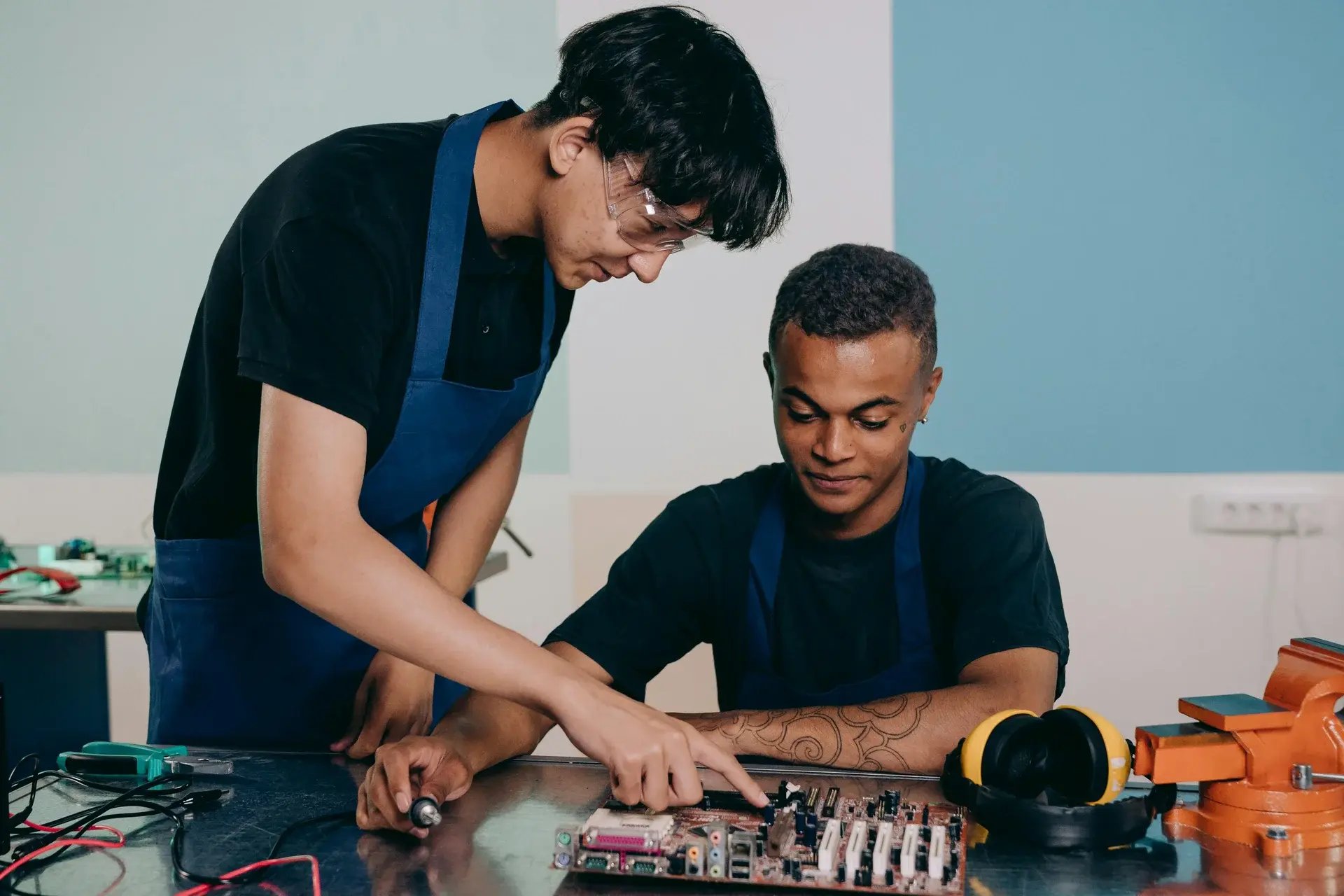
Most job descriptions list technical requirements first. The tools, certifications, platforms.
But ask any hiring manager what separates candidates who perform well long-term from those who don’t, and the answer is almost never a technical credential.
Learning the distinction between durable skills and technical skills — and why one compounds while the other depreciates — is key for anyone building a workforce development strategy that actually works.
The core distinction is durability.
Technical skills are job-specific capabilities tied to particular tools, platforms, or processes — programming in Python, configuring a CRM, managing cloud infrastructure.
They’re essential for performing specific tasks, and they have a defined shelf life: as tools evolve, the skills need to be refreshed.
Durable skills work differently. Communication, critical thinking, adaptability, leadership, emotional intelligence — these are rooted in how people think and interact, not what software they use.
But they don’t expire. In fact, they tend to become more valuable as workplaces grow more complex and as the pace of change increases.
|
Durable skills |
Technical skills |
|
|
Definition |
Human capabilities rooted in how people think, communicate, and solve problems |
Job-specific abilities tied to particular tools, platforms, or processes |
|
Shelf life |
Indefinite — compound over time and become more valuable as complexity grows |
Limited — require ongoing refreshing as tools and platforms evolve |
|
Examples |
Critical thinking, communication, adaptability, leadership, emotional intelligence |
Python, SQL, CRM configuration, cloud infrastructure, data visualization tools |
|
How developed |
Practice in realistic scenarios, structured feedback, simulation-based learning |
Formal training, certifications, hands-on tool use, targeted upskilling programs |
|
Career impact |
Primary driver of advancement, leadership readiness, and long-term performance |
Required for specific roles; entry threshold that durable skills then amplify |
The numbers make this concrete. Analysis of nearly 76 million U.S. job postings found that 8 of the top 10 most requested skills are durable — and the top durable skills are requested 4.7 times more often than the top hard skills.
This means that while demand for technical credentials is real, demand for human capabilities is greater.
The most effective way to understand durable skills is to see them operating in real situations — not as abstract qualities, but as specific capabilities that determine how work actually gets done.
The technical skill is the analysis. The durable skill is the critical thinking that recognized the significance of the finding, and the communication skill that allowed them to present it to skeptical stakeholders in a way that led to a change in decision.
There’s no technical playbook for this. What determines the outcome is adaptability — the ability to rapidly reassess, realign the team, and communicate updated expectations to leadership without losing credibility.
Their technical skills are fine. What they need is emotional intelligence to understand what’s driving the disengagement, communication to rebuild trust, and leadership to set a direction people will follow. None of those show up in a certification.
This is consistent with what research on job success suggests: roughly 85% comes from soft and durable skills, and only 15% from technical knowledge. Technical skills are the entry ticket. Durable skills are what determine performance once someone is inside.

The most effective development programs don’t treat durable and technical skills as separate tracks. They embed both in the same learning experience as part of the durable skills framework.
Immersive simulation creates the conditions. A branching simulation built around a realistic workplace scenario — a difficult client conversation, a compliance decision, a cross-functional conflict — requires both technical judgment and durable-skill execution simultaneously. Learners don’t just practice a tool; they practice applying it under realistic pressure, with the communication and judgment demands that come with real situations.
Adaptive learning personalizes the pathway, adjusting difficulty and content based on how each individual actually performs — so development stays relevant and targeted rather than assuming everyone starts from the same baseline.
Structured feedback loops — 360-degree reviews, post-simulation debriefs, and coaching from managers — add a reflective dimension that accelerates durable skill development. Without honest input from others, the interpersonal skills that define leadership and communication are especially hard to develop.
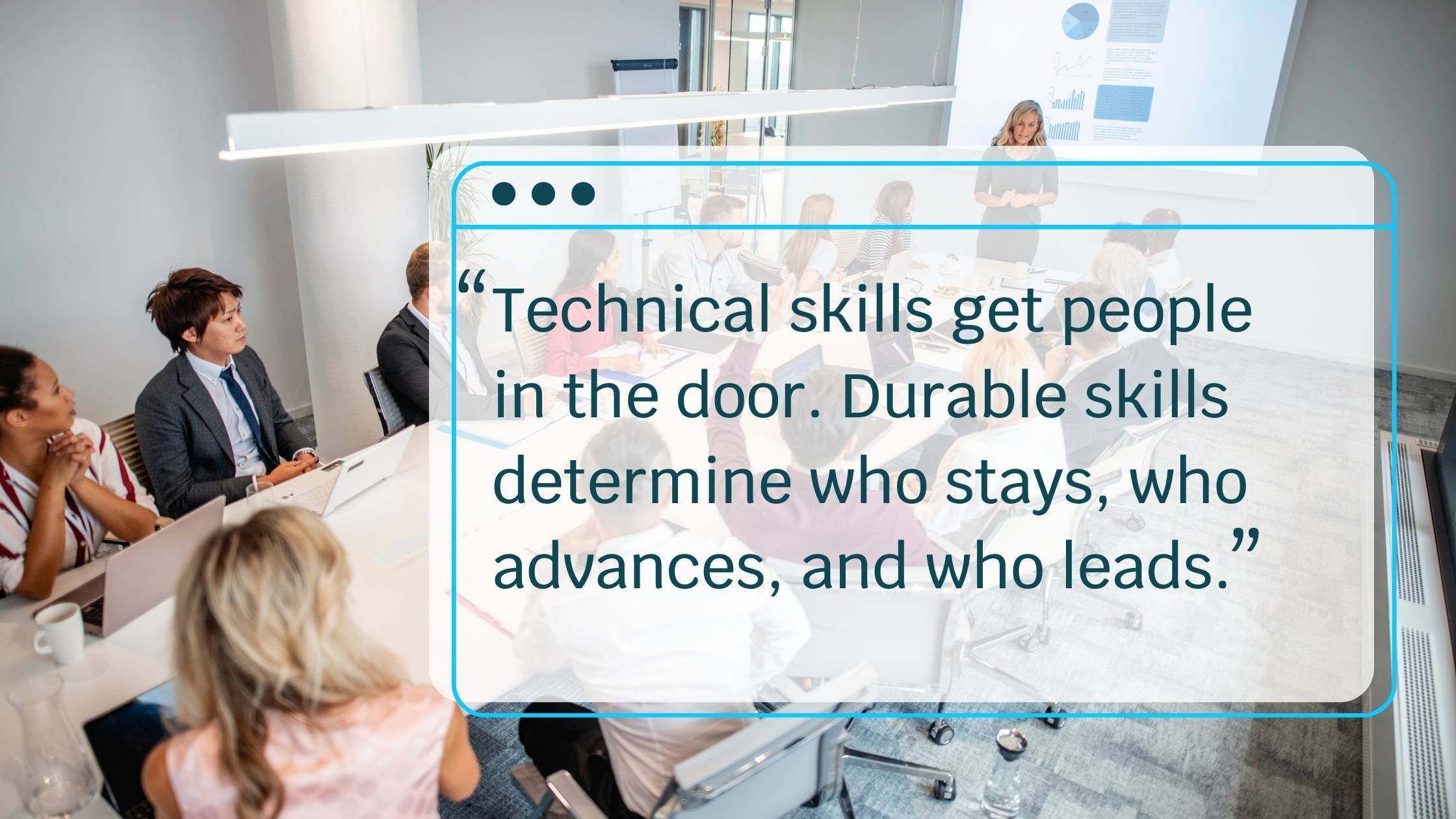
Technical skills get people in the door. Durable skills determine who stays, who advances, and who leads.
The shift is real and well-documented. A 2024 LinkedIn Learning analysis found 91% of employers say durable skills are equally or more important than technical skills when hiring. A ZipRecruiter survey put that at 93%.
And Forbes research on AI-era workforce capability finds that workers with strong durable skills earn higher salaries and advance further into leadership, precisely because those capabilities stay relevant as technical tools change around them.
The underlying driver is the pace of disruption. The WEF Future of Jobs 2025 report projects that 39% of workers’ core skills will change by 2030 — meaning a significant share of technical training will need to be refreshed or replaced within this decade.
Durable skills aren’t subject to that same cycle. Organizations that invest in them are building a capability that holds its value regardless of which technology comes next.
Technical and durable skills develop best together — in realistic scenarios that demand both simultaneously.
Skillwell combines AI-powered adaptive learning with immersive simulation to build and verify the capabilities that drive performance at every level of your organization.
Technical skills are tied to specific tools, platforms, or processes and have a defined shelf life as technology evolves
Durable skills — critical thinking, communication, adaptability, leadership — are rooted in how people think and interact, and they compound over time
8 of the top 10 most requested skills across 75 million job postings are durable skills, not technical credentials
Technical skills are the entry requirement; durable skills determine advancement and long-term performance
Yes — immersive simulation scenarios that require both technical decisions and durable-skill execution are the most effective approach
Adaptive platforms personalize the mix of development for each learner, matching content to demonstrated gaps in both skill types
Structured feedback and post-simulation debrief accelerate durable skills growth alongside technical practice
Organizations combining both approaches report 40% faster upskilling and measurable improvement across both skill dimensions
91–93% of employers say durable skills are equally or more important than technical skills in hiring decisions
The WEF projects 39% of workers’ core skills will change by 2030, making technical credentials a less stable long-term investment
Automation is handling more routine technical work, making the human capabilities that AI can’t replicate more valuable
Workers with strong durable skills earn higher salaries and advance further into leadership than those with technical skills alone
Here is the uncomfortable truth about AI in learning today: ...
Adaptive learning promises personalized pathways and measurable gains. Seasoned buyers know no technology arrives without ...
Remote and hybrid higher education changed what "hands-on" can mean.
Here is the uncomfortable truth about AI in learning today: ...
Adaptive learning promises personalized pathways and measurable gains. Seasoned buyers know no technology arrives without ...
Remote and hybrid higher education changed what "hands-on" can mean.