
Beyond the Content Explosion: What 17 ...
Blogs
Here is the uncomfortable truth about AI in learning today: ...
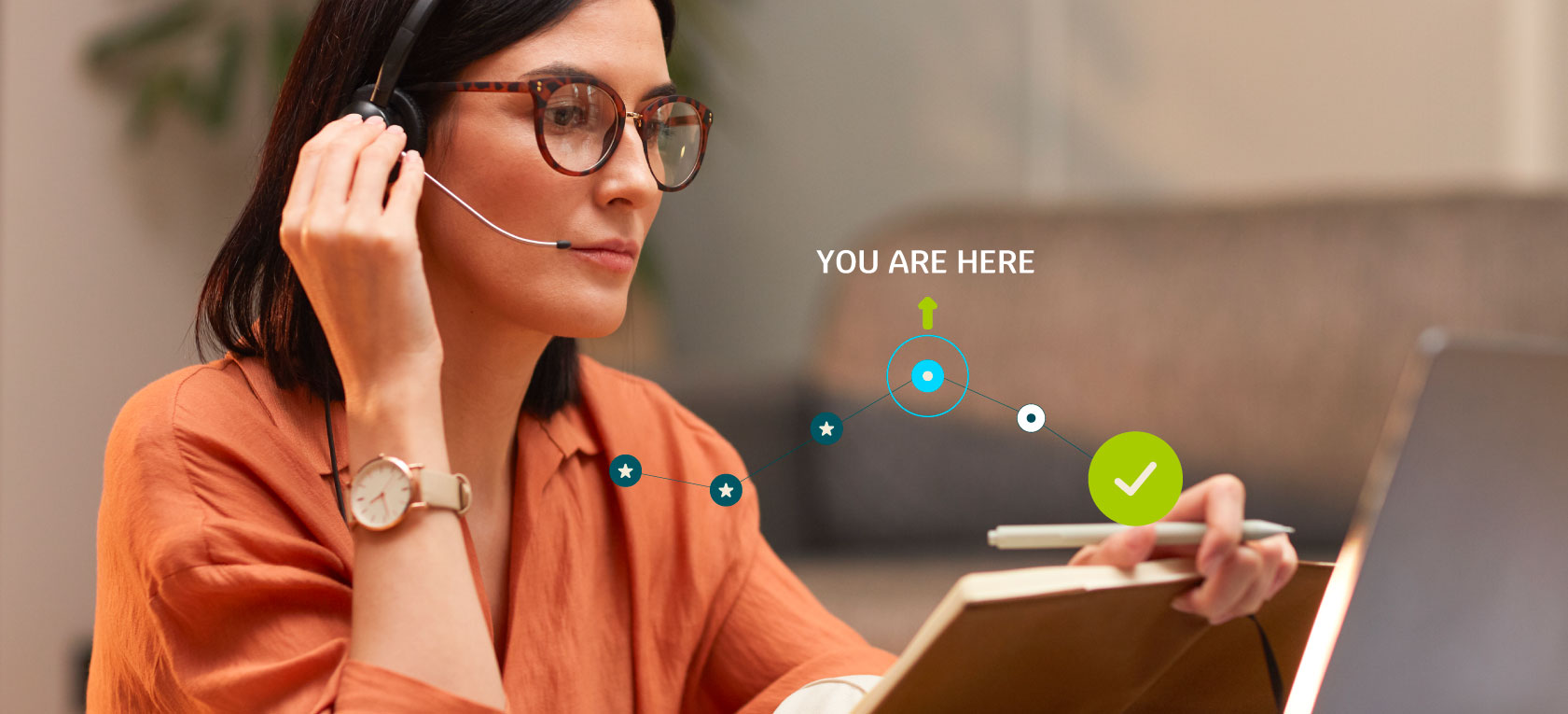
There's a fundamental gap in traditional training: the difference between understanding what to do and actually being able to do it.
You can teach someone the theory behind a difficult conversation, a complex procedure, or a high-stakes decision.
But until they've practiced it—felt the pressure, made choices, seen the consequences—they're not truly prepared.
Simulation training closes that gap by immersing learners in realistic scenarios. Simulation training builds skills through experience rather than observation. It's learning by doing in environments where mistakes become lessons rather than liabilities.
Let’s explore what simulation training is, touch on some business simulation examples and see how different business units can leverage training simulation software to meet their unique needs.
Simulation training is a learning method that uses realistic, immersive environments to replicate real-world scenarios.
The concept is straightforward: create a safe space where learners can practice skills, make decisions, and experience outcomes—without the risks that come with learning on the job.
This matters because experiential learning sticks. People learn better by doing than by watching or reading. When you've actually navigated a challenging situation (even a simulated one), you develop capabilities that passive training can't build.
Simulation training proves especially valuable in high-stakes fields.
Healthcare professionals, for instance, need to be prepared for critical situations before they encounter them with real patients. Sales teams need to handle objections smoothly without fumbling through their first attempts on actual prospects.
In each case, simulation provides the practice ground that builds competence and confidence.
The verified skills data captured during these simulations adds another layer of value. Organizations can use this data to personalize learning pathways, ensuring each learner receives targeted training aligned with their specific needs and development goals.
Repetition builds mastery. Residents can practice challenging healthcare procedures dozens of times, developing proficiency that would take years to build through real-world experience alone.
Instructors provide real-time guidance on performance. Learners don't wait until a review meeting to find out what they did wrong—they can adjust immediately.
Practicing in a risk-free environment builds the confidence professionals need to perform under pressure. When you've successfully navigated a complication in simulation, you approach the real situation with composure rather than anxiety.
With AI-powered adaptive learning, simulations adjust in real time based on performance. A resident struggling with a particular technique gets more practice there; one who's excelling moves on to more complex scenarios.
These benefits explain why simulation training has become standard in fields where preparation directly impacts outcomes—and why more industries are adopting similar approaches.
Simulation training isn't just for surgeons and pilots. Organizations across industries are discovering how tailored simulations can build skills throughout the business.
Here's how different teams apply this approach:
Sales professionals engage in role-playing simulations that replicate customer interactions. They practice:
Branching simulations make these experiences more realistic by creating diverse scenarios based on the learner's choices. Say one thing, and the simulated customer responds one way; try a different approach, and the conversation takes a different path.
This variability teaches adaptability—the ability to read situations and adjust, rather than rigidly following a script.
Operational teams use simulations to rehearse processes and test scenarios:
By simulating different scenarios before they happen, teams identify inefficiencies and develop contingency plans. When disruptions occur in reality, they've already practiced their response.
Integrated 30-60-90-day pathways can track progress through these simulations, ensuring that learning objectives are met and that skills develop systematically over time.
Customer service teams benefit from simulations that replicate the full range of customer interactions:
This training develops problem-solving skills and communication techniques in a low-risk environment. Representatives build confidence handling difficult situations before they're on the line with a real customer.
The audit-ready, evidence-based records generated during these simulations document competence—valuable for compliance requirements and performance evaluations.
Emerging and established leaders use simulations to practice:
Leadership skills are tough to develop through traditional training. Reading about managing conflict doesn't prepare you for the actual conversation. Simulation provides the practice ground that builds real capability.
These tailored business simulation examples demonstrate how the approach adapts to different functions. Each team gets training relevant to their actual challenges, not generic content that may or may not apply.
AI has transformed what's possible in simulation training—making it faster to create, more personalized to deliver, and more effective at building skills.
AI analyzes learner data and performance metrics to create custom training experiences. Instead of everyone receiving identical simulations, each person gets scenarios calibrated to their current skill level and specific development needs.
For example, an organization might use AI to assess a new hire's existing capabilities, then generate simulations that target the specific gaps in their knowledge.
Someone with strong technical skills but weak communication abilities gets different training than someone with the opposite profile.
Creating quality simulations used to require significant time and specialized expertise. AI-powered authoring tools have changed that equation dramatically.
Organizations can now generate branching simulations quickly, responding to changing training needs without lengthy development cycles.
A new product launch, a shift in customer service approach, a change in compliance requirements—AI makes it possible to create relevant training rapidly.
AI algorithms analyze performance data across learners, identifying patterns that inform simulation refinement. Which scenarios produce the strongest skill development? Where do learners consistently struggle? What adjustments improve outcomes?
This feedback loop means simulations get better over time, staying relevant and effective rather than becoming stale.
As you can imagine, the benefits scale up quickly:
Adaptive assessment-driven onboarding extends these benefits to new hires, creating personalized journeys that accelerate ramp-up time while ensuring critical competencies develop systematically.
The evidence is clear: simulation training outperforms traditional approaches for building practical skills.
When people learn by doing—making decisions, experiencing consequences, adjusting their approach—they develop capabilities that stick. They build not just knowledge but judgment, not just understanding but confidence.
For organizations, this translates to:
The investment in simulation training pays off through a more capable, confident workforce.
No matter your industry or needs, AI-powered simulation training can help you enhance your outcomes faster than any other training style.
Want to learn more? Explore how Skillwell combines AI-powered adaptive learning with immersive simulation training to create personalized, effective development experiences for your team.
Here is the uncomfortable truth about AI in learning today: ...
Adaptive learning promises personalized pathways and measurable gains. Seasoned buyers know no technology arrives without ...
Remote and hybrid higher education changed what "hands-on" can mean.
Here is the uncomfortable truth about AI in learning today: ...
Adaptive learning promises personalized pathways and measurable gains. Seasoned buyers know no technology arrives without ...
Remote and hybrid higher education changed what "hands-on" can mean.