

Beyond the Content Explosion: What 17 ...
Blogs
Here is the uncomfortable truth about AI in learning today: ...
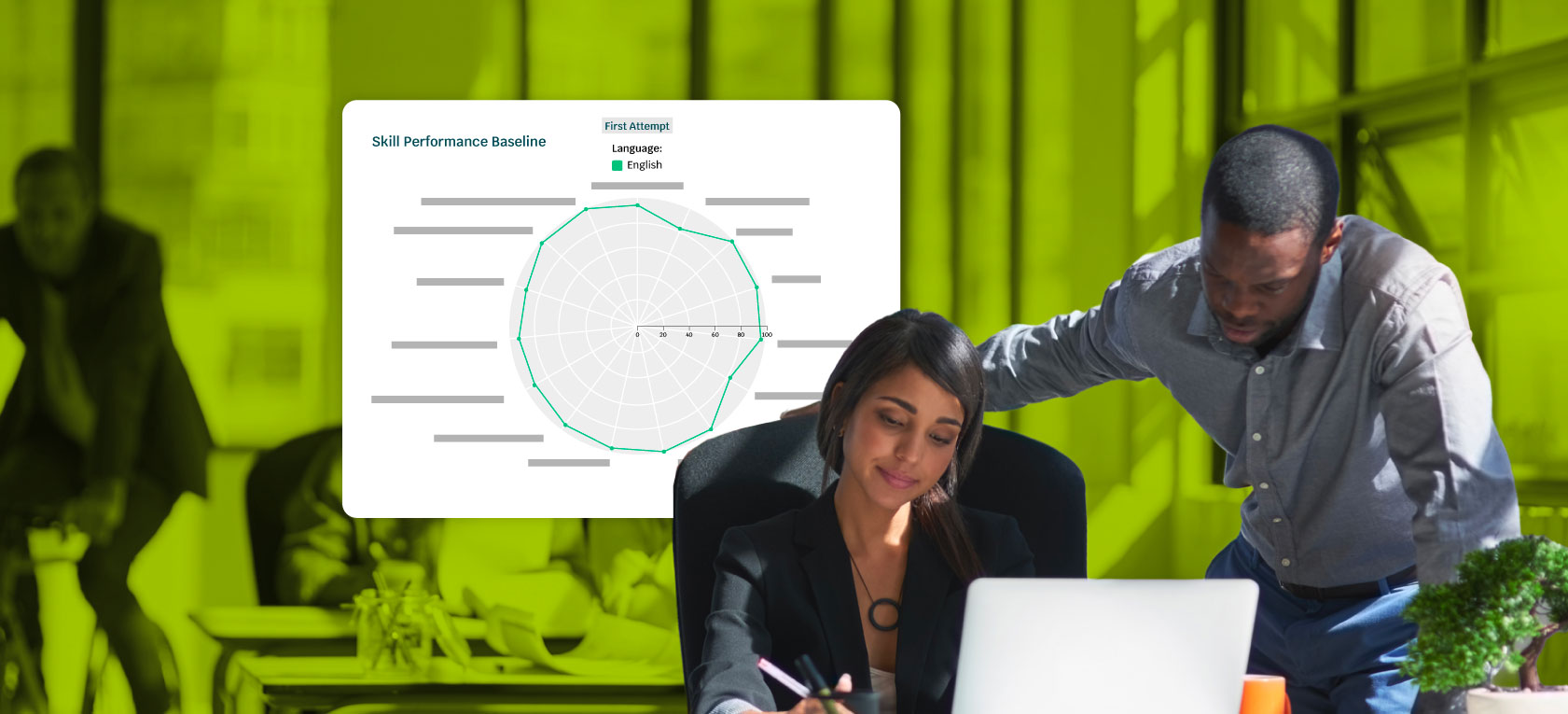
How do you prepare employees for challenges they haven't faced yet?
Traditional training can teach concepts and processes, but there's a gap between knowing what to do and actually doing it under pressure.
That's where business simulation examples prove their value.
Business simulations create immersive scenarios where employees practice real decision-making. They could be handling difficult customers, navigating supply chain disruptions, or leading teams through change— all without real-world consequences.
But is simulation training truly effective for business development and learning? Let’s explore.
Want to learn more about the tools that drive simulation training? Check out our guide to Training Simulation Software.
Business simulation is a training approach that replicates real-world business scenarios in a controlled environment.
The idea is simple: give learners a chance to practice decision-making and problem-solving without the risks that come with learning on the job. Participants can explore different strategies, make mistakes, and see how their choices play out—all in a safe space.
Why does this matter? Because understanding a concept isn't the same as applying it.
Simulations let people experience complex business dynamics firsthand. They develop critical thinking skills, learn to adapt under pressure, and build the kind of judgment that only comes from practice.
When integrated with AI-powered adaptive learning, simulations become even more powerful. The experience personalizes to each participant, delivering targeted feedback based on their unique performance. Someone struggling with negotiation gets more practice there; someone excelling moves on to advanced challenges.
Business simulation examples span virtually every industry. Here are a few that illustrate the range of what's possible:
A classic supply chain simulation that demonstrates inventory management complexities and the "bullwhip effect"—how small changes in consumer demand can create massive swings upstream. Participants quickly discover how their decisions ripple through the entire chain.
While primarily a game, SimCity offers genuine insights into urban planning and resource management. Some city management programs use it to help planners think through infrastructure decisions and long-term consequences.
These cover marketing, operations, and strategy topics, putting participants in realistic business contexts where their decisions have measurable outcomes. They're widely used in MBA programs and corporate training alike.
Modern AI tools and simulations like Skillwell have also changed what's possible. Organizations can now generate branching simulations in minutes—customized scenarios that reflect the specific challenges their teams actually face.
No technical expertise required, and the training stays relevant to your actual business context.
Building an effective business simulation follows a clear process. Here are the five essential steps:
Start by clarifying what you want participants to learn. What skills should they develop? What decisions should they practice making? Clear objectives guide every subsequent choice.
Create the scenario, establish the rules, and set the parameters. This is where you determine what challenges participants will face and what choices they'll need to make.
The scenario should feel authentic. If it's obviously artificial, participants won't engage as they would with a real challenge.
Facilitate the experience, making sure participants understand their roles and the context. Good facilitation keeps people engaged and ensures the learning objectives stay in focus.
This step is often where the deepest learning happens. After the simulation, discuss what occurred: What decisions did participants make? What worked? What didn't? What would they do differently?
The debrief transforms experience into insight.
Evaluate participants' performance against predefined criteria. This helps identify who's ready for more advanced challenges and who needs additional support.
The integration of verified skills data during simulations strengthens this process significantly. You get concrete evidence of participant capabilities—not just completion checkboxes—which allows you to tailor ongoing training pathways to actual needs.
One of the most valuable applications of business simulation is skills gap analysis. By watching how employees navigate realistic scenarios, you gain insights that surveys and self-assessments simply can't provide.
Here's how to approach it:
Collect data during the simulation on decision-making processes and outcomes. How quickly do participants identify the core issue? What options do they consider? How do they handle unexpected complications?
This data reveals patterns—both strengths to leverage and gaps to address.
Create opportunities for participants to discuss their experiences and learning points. These conversations often surface insights that metrics alone miss.
This collaborative approach also builds a culture of continuous improvement. People become more comfortable acknowledging areas where they need development.
Consider how other organizations have used simulations for skills assessment. Healthcare organizations, for example, have improved patient interaction skills through role-playing scenarios. These day-in-the-life simulations prove particularly effective in high-stakes environments where communication and quick decision-making are critical.
By leveraging these insights, you can tailor training programs to address specific gaps—not generic weaknesses, but the actual challenges your people face.
The use of audit-ready, evidence-based records adds another layer of value. You're not just identifying gaps; you're documenting competence in ways that support compliance requirements and demonstrate your commitment to genuine development.
Adaptive assessment-driven onboarding extends this approach to new hires. Personalized 30-60-90 day journeys align with each person's unique skill set and learning needs, accelerating the ramp-up process while reducing overall training time.
"Best" depends on your specific needs, but these platforms consistently earn high marks:
We’ve become known for our unique combination of AI-powered adaptive learning and immersive simulation training.
Skillwell allows you to create branching simulations in minutes without technical expertise, plus adaptive, assessment-driven onboarding that creates personalized 30-60-90-day development pathways.
Excellent for systems thinking and dynamic modeling. Users can visualize and analyze complex systems, making it valuable for strategic planning.
Known for 3D visualization capabilities that create immersive simulations. The visual element enhances understanding and keeps participants engaged.
While primarily a quiz tool, Kahoot! offers interactive elements that can supplement simulation-based training, adding engagement and quick knowledge checks.
When evaluating options, consider:
The right choice can significantly enhance learning outcomes. The wrong choice creates friction that undermines even well-designed training programs.
Customer service is a natural fit for simulation training. Representatives face unpredictable situations daily—difficult customers, complex problems, high-pressure moments. Reading a script doesn't prepare them for that reality.
Simulations let reps practice handling various scenarios before they're on the line with an actual customer. Organizations that incorporate simulations into customer service training consistently report:
By capturing verified skills data during simulations, organizations can personalize learning pathways instantly.
A rep who struggles with de-escalation gets targeted practice; one who excels moves on to more complex scenarios.
Comprehensive simulation programs cover multiple business dimensions—finance, marketing, operations, strategy—in an integrated experience.
The Global Business Simulation is one example. Participants run a virtual company in a competitive marketplace, making decisions that affect performance across all functions. They quickly learn how choices in one area ripple through others.
Outcomes from comprehensive programs typically include:
These business simulation examples for students provide invaluable hands-on experience, but they're equally powerful for experienced professionals looking to sharpen their skills or prepare for expanded roles.
Day-in-the-life scenarios that resonate emotionally with learners enhance both retention and real-world application.
When training feels relevant to actual challenges, people engage differently—and remember more.
Business simulations bridge the gap between knowing and doing. They give your team practice with real challenges before the stakes are real.
Whether you're identifying skill gaps, developing leaders, or preparing customer service reps for difficult conversations, simulation-based training delivers results that traditional approaches can't match.
Ready to see what's possible? Explore how Skillwell combines AI-powered adaptive learning with immersive simulation training to accelerate skill development—reducing training time while building genuine competence.
Here is the uncomfortable truth about AI in learning today: ...
Adaptive learning promises personalized pathways and measurable gains. Seasoned buyers know no technology arrives without ...
Remote and hybrid higher education changed what "hands-on" can mean.
Here is the uncomfortable truth about AI in learning today: ...
Adaptive learning promises personalized pathways and measurable gains. Seasoned buyers know no technology arrives without ...
Remote and hybrid higher education changed what "hands-on" can mean.