Skip to content
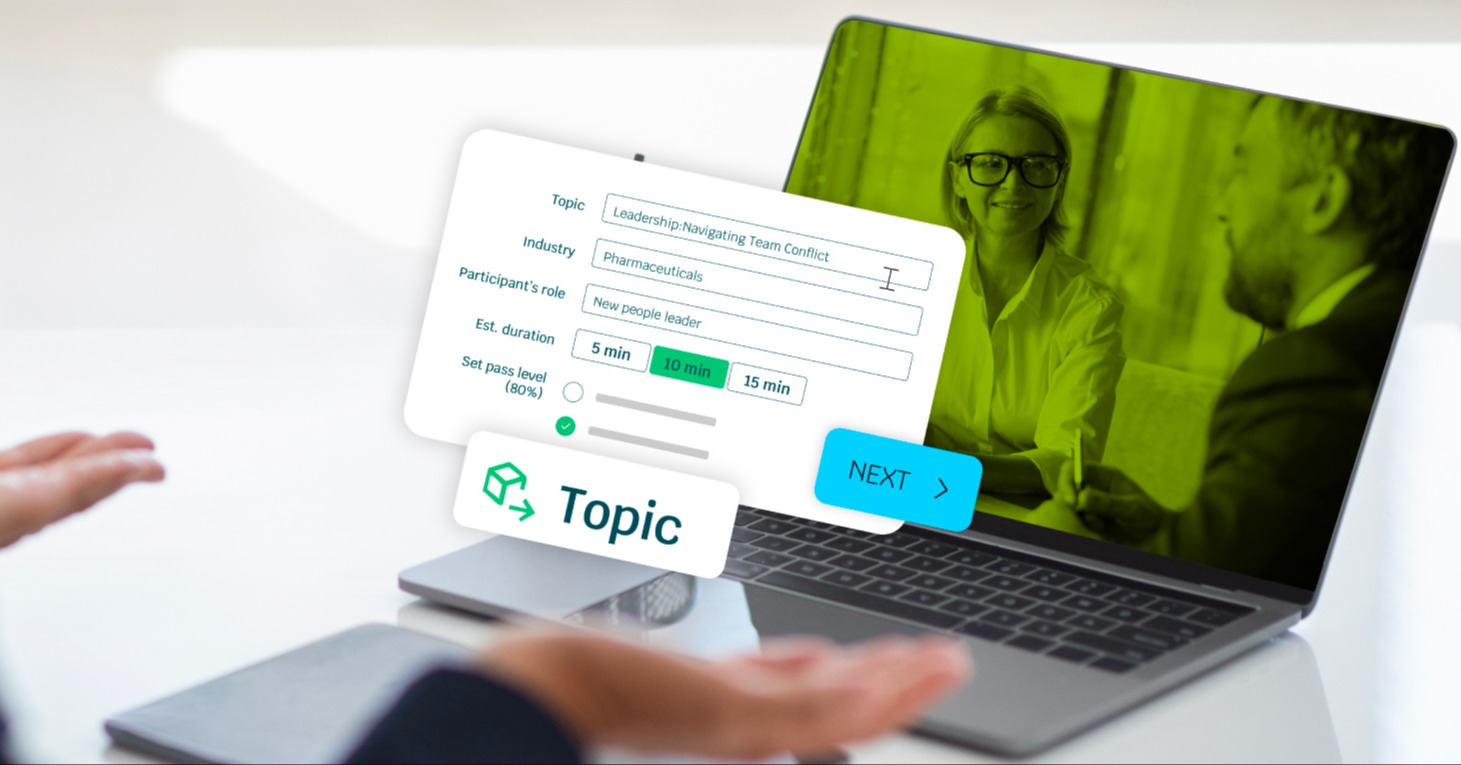
L&D professional creating a leadership development simulation using the best upskilling platform
Blogs

Which is the Best Upskilling Platform?

The skills that got your team here won't necessarily get them where they need to go.

Industries evolve. Technology advances. Job requirements shift. 

What may have been cutting-edge knowledge five years ago may be table stakes today—or obsolete entirely.

This reality has made upskilling platforms essential for organizations that want to stay competitive. 

But with so many options available, how do you determine which corporate training software platform actually delivers results?

The answer depends on what you're trying to accomplish. Let’s compare some of the most popular upskilling platforms and explore how training simulation software accelerates skill development. With the right understanding, you can identify the right fit for your organization.

What is an Upskilling Platform?

An upskilling platform is a specialized tool designed to help professionals enhance existing skills or acquire new ones. 
Typical upskilling platforms offer courses, training programs, and resources to support continuous development. 

Most have features such as progress tracking, assessment tools, content libraries, and reporting dashboards that help organizations monitor employee development. Some platforms focus primarily on content delivery—hosting videos, documents, and quizzes—while others emphasize active skill-building through interactive exercises or simulations.

The best platforms go beyond content delivery to create genuine skill development—not just course completion.

Why Upskilling Matters For Your Business Right Now

The pace of change has accelerated dramatically. Research suggests that 40% of workers feel their current skills may become obsolete within the next five years. That's not a distant concern—it's an immediate challenge.

For organizations, this creates urgency. Teams that don't continuously develop fall behind. Competitors with more capable workforces win.

For individuals, it's equally pressing. Career advancement increasingly depends on demonstrated ability to learn and adapt, not just tenure or credentials.

Upskilling platforms address this challenge by making continuous learning accessible, structured, and measurable. The best platforms go beyond content delivery to create genuine skill development—not just course completion.

Which Platform is Best for Learning New Skills?

Several platforms have emerged as leaders in the upskilling space. Each takes a different approach.

Skillwell

At Skillwell, our tools combine AI-powered adaptive learning with immersive simulation training. Rather than passive content consumption, Skillwell creates realistic scenarios where employees practice skills in controlled environments.

  • Distinctive approach: Uses verified skills data captured during simulations to personalize learning pathways. Training adapts based on demonstrated performance, not just preferences or self-assessment.
  • Best for: Organizations that need practical skill development—not just knowledge transfer—particularly for high-stakes interactions like sales conversations, customer service, patient communication, or leadership situations.
  • Results: Users report an average skill improvement of 27% after completing tailored training pathways. Adaptive assessment-driven onboarding creates personalized 30-60-90 day journeys that ensure new hires develop actual competence.

Coursera

Partners with top universities and companies to offer courses across technical and soft skills. Strong academic foundation with recognized credentials.

  • Distinctive approach: Brings university-quality content to professional development, including degree programs and professional certificates.
  • Best for: Individuals seeking formal credentials or organizations seeking to have employees develop foundational knowledge in new domains.

LinkedIn Learning

Features an extensive library of video courses covering business, technology, and creative skills. Integration with LinkedIn profiles makes completed courses visible to professional networks.

  • Distinctive approach: Breadth of content with convenient, on-demand access. Learning fits into busy schedules through bite-sized videos.
  • Best for: Self-directed learners who want flexible access to diverse topics, or organizations providing general professional development resources.

How to Choose the Right Upskilling Platform

The right platform depends on your goals:

  • Need practical skill development? Simulation-based platforms like Skillwell build capability through practice.
  • Need formal credentials? Academic partnerships like Coursera provide recognized certifications.
  • Need broad access to diverse content? Libraries like LinkedIn Learning offer flexibility and variety.
Many organizations use multiple platforms for different purposes—simulation for critical skill development, content libraries for general professional growth.

How Does Simulation Make Upskilling Faster?

Here's a fundamental truth about learning: people develop skills faster through practice than through passive consumption.
pull quote of article text

You can watch videos about negotiation techniques. You can read about handling difficult conversations. But until you've actually practiced—made decisions, experienced pushback, adjusted your approach—you haven't truly developed the skill.

Why Simulation Accelerates Learning

  • Active engagement. Simulations require decisions and actions, not just attention. This active involvement creates stronger neural pathways and better retention.
  • Realistic context. Day-in-the-life scenarios mirror actual challenges employees face. Skills developed in realistic contexts transfer more effectively to real situations.
  • Safe failure. Mistakes in simulation become learning opportunities, not career setbacks. People experiment more freely when consequences aren't real.
  • Immediate feedback. Learners see results of their choices in real time, tightening the loop between action and understanding.

Modern platforms like Skillwell create immersive simulation training with branching simulations that can be generated in minutes via AI. Organizations don't need technical expertise to develop relevant scenarios.

This accessibility matters. When creating new training content is quick and easy, organizations can respond rapidly to emerging skill needs rather than waiting months for custom development.

Is There a Platform to Track Employee Training Progress?

Tracking matters. Without visibility into who's developing which skills, training becomes a black box—resources go in, but you can't see what's coming out.

Essential Tracking Features

  • Analytics dashboards. Visual insights into skill development across individuals and teams. See patterns, identify gaps, and measure progress over time.
  • Progress monitoring. Track completion rates, assessment scores, time invested, and skill progression. Managers gain visibility without requiring manual check-ins.
  • Performance data. Beyond completion tracking, the best platforms capture evidence of demonstrated competence. Did someone pass a quiz, or can they actually perform in realistic scenarios?
  • Feedback mechanisms. Enable ongoing assessment and adjustment. Training programs improve when informed by actual learner performance.

Monitoring employee development ensures training investments align with business objectives. Without measurement, you can't know whether programs work or where to focus resources.
How Do Different Platforms Compare on Pricing and Features?

Investment decisions require understanding both cost and value. Here's how leading platforms approach pricing:

Skillwell

  • Subscription model with tiered pricing based on user count. All tiers include AI-powered authoring, adaptive assessments, and simulation capabilities.
  • Value proposition: Higher per-user cost than content libraries, but delivers skill development rather than just content access. The combination of personalized learning pathways and verified skills data creates measurable capability improvement.

Coursera

  • Flexible pricing—pay per course or subscribe for unlimited access. Enterprise plans are available for organizational deployment.
  • Value proposition: Access to university-quality content and recognized credentials at a lower cost than traditional education.

LinkedIn Learning

  • Monthly subscription providing access to the full content library. Enterprise licensing is available with additional administrative features.
  • Value proposition: Broad content access at a competitive price point. Good value for organizations wanting general professional development resources.

So, which is best for your organization? You’ll find that price per user matters less than return on investment. Consider:

  • What outcomes do you need? Knowledge acquisition? Practical skill development? Compliance documentation?
  • How will you measure success? Completion rates? Assessment scores? On-the-job performance improvement?
  • What's the cost of not upskilling? Lost productivity? Competitive disadvantage? Compliance risk?

Platforms focused on personalized learning and skills data analytics—like Skillwell—may deliver higher ROI for organizations needing measurable skill development, even at higher per-user costs.

Finding the Right Fit

The best upskilling platform is the one that develops the specific capabilities your organization needs, in ways that engage your particular learners, with measurement that proves results.

  • For general professional development and self-directed learning, content libraries offer breadth and flexibility.
  • For formal credentials and foundational knowledge, academic partnerships provide recognized value.
  • For practical skill development—especially in high-stakes areas like customer interactions, sales, healthcare communication, or leadership—simulation-based platforms build capability that content consumption alone can't match.

Ready to Accelerate Your Team's Development? Try Skillwell Now

Upskilling isn't optional anymore. The question is whether your approach actually builds capability or just generates completion certificates.

Explore how Skillwell combines AI-powered adaptive learning with immersive simulation training to create personalized development experiences that deliver measurable skill improvement.

Take A Tour of Skillwell's Capabilities Now

Related insights

A male student focused on a laptop screen that displays the final stage of a vocational skills training program.

What Is a Vocational Skills Training ...

Blogs

Not every career path runs through a four-year degree. Skilled trades, healthcare support roles, technical positions, and ...

Learn more
A laptop screen showing a skills training course with a virtual coach speaking

What Are Skills Training Courses?

Blogs

The gap between what employees know and what they can do costs organizations more than most realize. Traditional training ...

Learn more
A happy student after completing his online training on employable skills

What Are Generic Skills in the Context ...

Blogs

Employers consistently say the same thing: graduates have technical knowledge but lack the broader capabilities that actually ...

Learn more
A male student focused on a laptop screen that displays the final stage of a vocational skills training program.

What Is a Vocational Skills Training ...

Blogs

Not every career path runs through a four-year degree. Skilled trades, healthcare support roles, technical positions, and ...

Learn more
A laptop screen showing a skills training course with a virtual coach speaking

What Are Skills Training Courses?

Blogs

The gap between what employees know and what they can do costs organizations more than most realize. Traditional training ...

Learn more
A happy student after completing his online training on employable skills

What Are Generic Skills in the Context ...

Blogs

Employers consistently say the same thing: graduates have technical knowledge but lack the broader capabilities that actually ...

Learn more