

Beyond the Content Explosion: What 17 ...
Blogs
Here is the uncomfortable truth about AI in learning today: ...
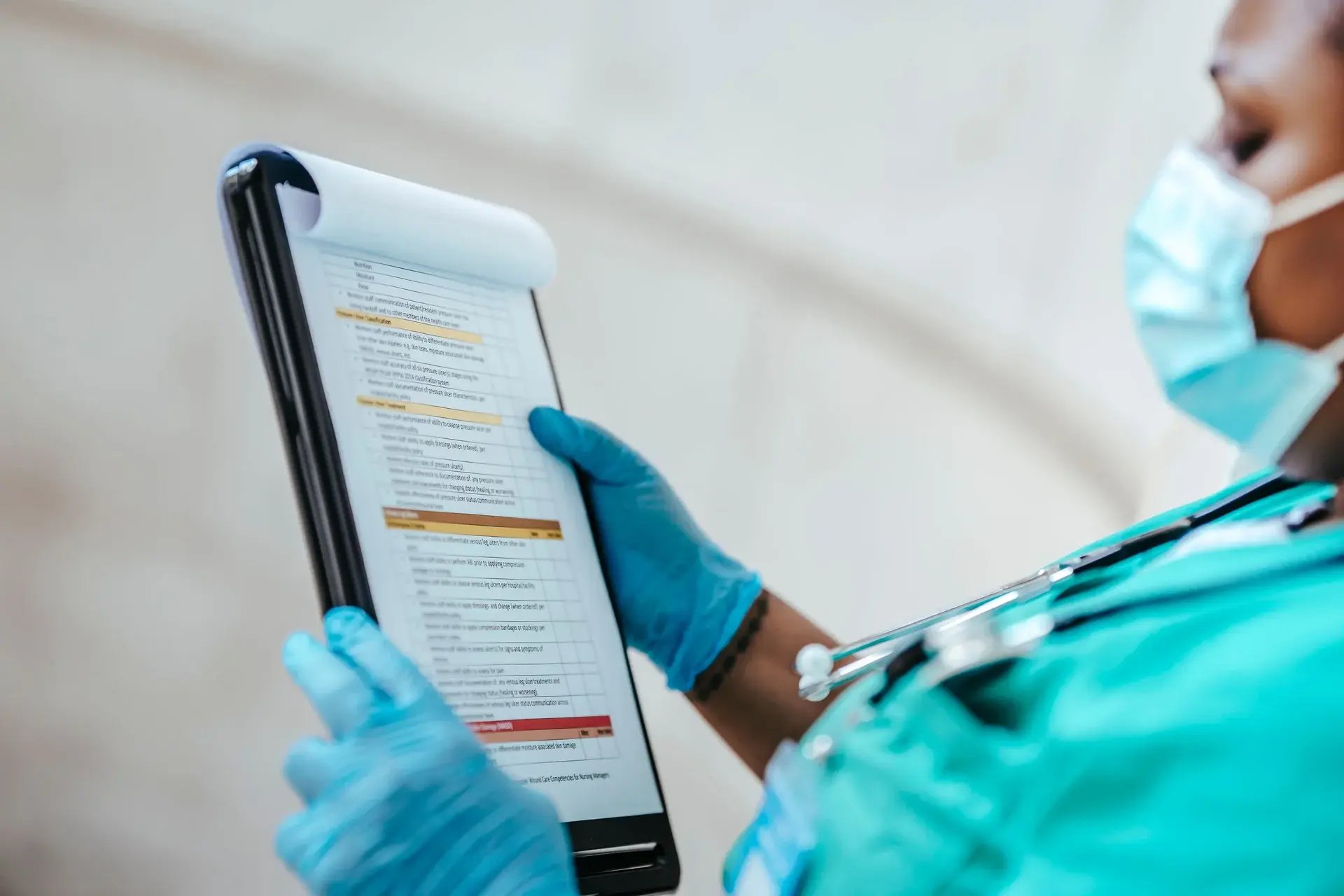
If you're responsible for a frontline team, it pays to be precise about what these roles truly involve, because you can't build effective training for a job you've only defined loosely.
Frontline workers carry more operational weight than their titles suggest, and the gap between a strong one and a struggling one shows up directly in your numbers.
That means good frontline worker training starts with understanding the work itself – and aligning training with the roles that matter most.
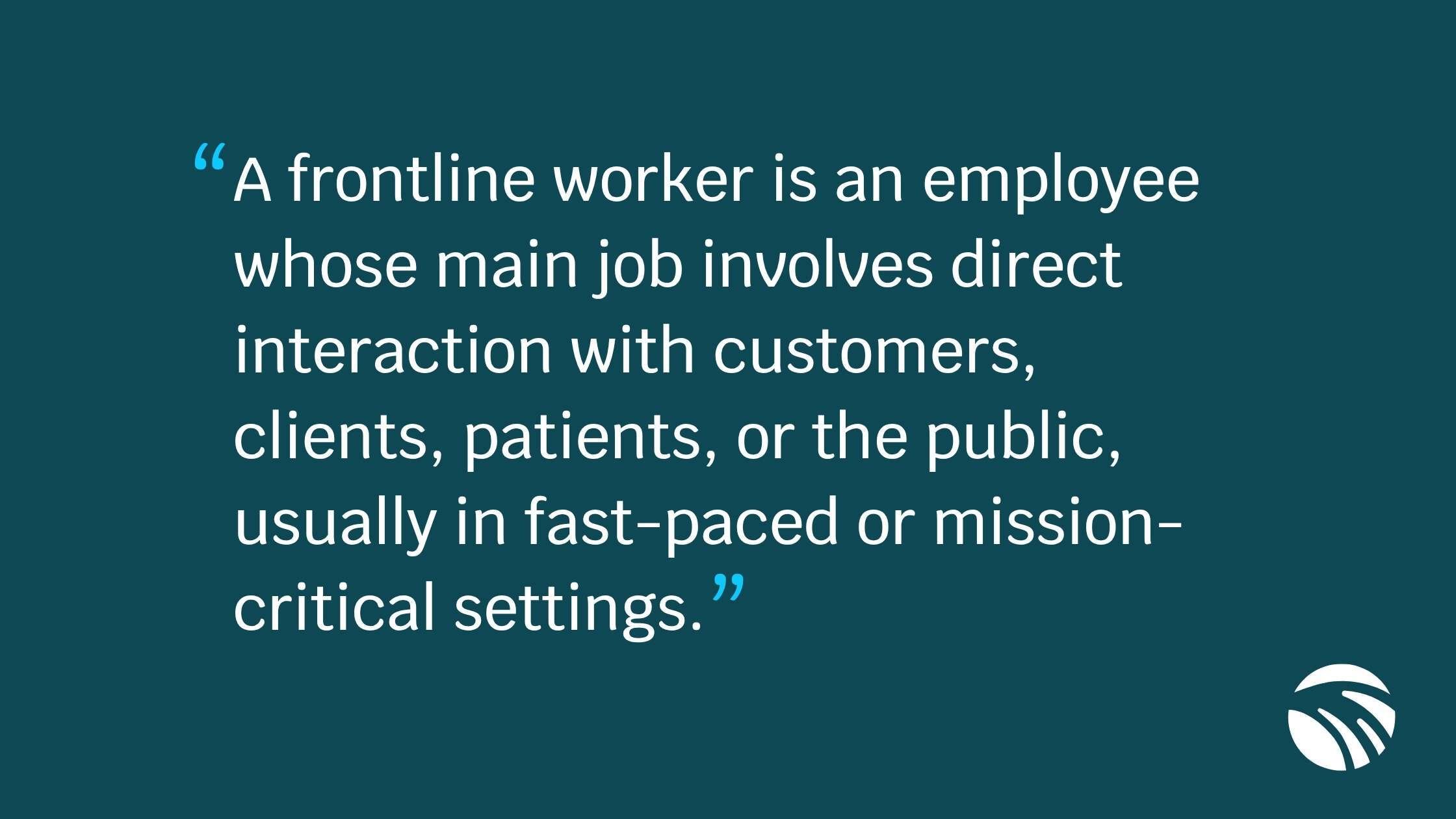
A frontline worker is an employee whose main job involves direct interaction with customers, clients, patients, or the public, usually in fast-paced or mission-critical settings.
The work is hands-on, the decisions happen in real time, and adaptability is part of the job description. These are the people who represent the organization at the exact moment it matters most.
The category spans industries: nurses, paramedics, and medical assistants in healthcare; teachers and aides in education; associates and cashiers in retail; servers and hotel staff in hospitality; and operators, drivers, and assembly workers across manufacturing and logistics.
For anyone planning training, the takeaway is that “frontline” isn't one job. It's dozens, each with its own pressures.
Effective programs account for that range rather than defaulting to generic content, and increasingly use adaptive learning to tailor the path to each role and each person.
Yes on both counts. Nurses are about as frontline as it gets, assessing patients, administering treatment, and coordinating care while managing high-stakes, high-stress situations.
Teachers operate on the front lines of education, shaping outcomes as they instruct, assess, and support students amid constantly changing classroom demands.
The responsibilities differ:
Nurses focus on patient health and safety, often working shifts and handling emergencies
Teachers focus on instruction, classroom management, and student development.
But the underlying demands rhyme. Both need empathy, fast judgment, and a steady commitment to keeping their skills current.
That last point is the one that matters for training. Both fields change fast, with new devices and record systems in healthcare and new curricula and hybrid formats in education, so the organizations behind them need training that updates quickly and meets each professional where they are.
Frontline workers are the face of the organization, and their performance flows straight into customer satisfaction, loyalty, and reputation.
Consistent, high-quality service from this group is often what separates a business from its competitors.
They drive results by responding fast to customer needs, solving problems under pressure, building trust, and acting as the everyday embodiment of the brand. A retail associate who handles a frustrated shopper well can save a relationship; a nurse who communicates clearly builds trust in the whole care experience.
That impact grows when leaders can actually see it. Capturing verified skills data gives you visibility into where capability is strong and where the gaps are, so development goes where it's needed.
Organizations pairing AI-powered adaptive learning with simulation have reported up to 40% faster upskilling and a 27% average skill improvement over traditional methods, gains that show up in both compliance and performance.
Most frontline programs build a mix of technical and interpersonal skills. The interpersonal core tends to be communication, problem-solving, customer service, adaptability, and teamwork, the durable skills that hold up even as tools and tasks change.
In regulated fields like healthcare or manufacturing, that base expands to include compliance and safety protocols, emergency response, and industry-specific technical skills, where the stakes are higher and the documentation requirements are real.
How those skills get built is what's changed. Personalized pathways and branching simulations let people practice decision-making in a risk-free setting, while adaptive learning tailors content to each person's strengths and gaps. The result isn't just faster upskilling; it's training that actually transfers to the floor, backed by evidence of who's ready.
Training doesn't end the challenges.
Even with a solid program, frontline staff deal with stress, fatigue, heavy workloads, limited access to support, and the constant introduction of new tools and processes. Left unaddressed, those pressures show up as turnover and inconsistent performance.
The fix is ongoing support, not a one-time event. Mentorship and peer coaching keep knowledge flowing, continuous learning keeps skills current, and regular feedback and performance data help managers spot trouble early.
Adaptive learning makes that sustainable: instead of pushing the same refresher to everyone, it surfaces the right practice for the person who needs it, when they need it.
For the organization, that steady support is what protects the investment. It keeps engagement up, reinforces what training started, and gives your frontline the backing to perform well even when the work is demanding.
Understanding what frontline workers do is the first step. Providing training that fits the role and ongoing support after onboarding is what turns that understanding into performance.
Want to see how that works in practice? Explore how Skillwell combines adaptive learning with immersive simulation to build frontline programs tailored to every role and backed by real skills data.
Not exactly. Frontline workers interact directly with customers or operations, while “essential worker” refers to roles deemed critical during disruptions.
Many frontline roles are also essential, especially in healthcare and the food supply.
The defining trait of frontline work is direct, real-time contact with people or core operations.
Both groups tend to need fast, practical, ongoing training.
Healthcare, retail, hospitality, manufacturing, logistics, and education all depend heavily on frontline staff.
These sectors share high customer contact, safety or compliance demands, and often high turnover.
That combination makes role-specific training especially important.
Each industry shapes its training around its own risks and customer expectations.
The work changes constantly, with new tools, protocols, products, and regulations arriving regularly.
A single onboarding can't keep pace with that rate of change.
Skills decay without reinforcement, especially for tasks done infrequently.
Ongoing, adaptive training keeps capability current without retraining everyone from scratch.
Space out short refreshers to fight skill decay without overwhelming busy staff.
Use peer coaching and recognition to keep momentum.
Let adaptive learning target the right content to the right person instead of generic reminders.
Tie development to clear growth opportunities so training feels worth the time.
Communication, problem-solving, adaptability, teamwork, and customer service top the list.
In regulated fields, compliance and safety skills are equally critical.
These durable skills transfer across roles even as specific tasks change.
Simulation is one of the most effective ways to build them, because they're learned by doing.
Here is the uncomfortable truth about AI in learning today: ...
Adaptive learning promises personalized pathways and measurable gains. Seasoned buyers know no technology arrives without ...
Remote and hybrid higher education changed what "hands-on" can mean.
Here is the uncomfortable truth about AI in learning today: ...
Adaptive learning promises personalized pathways and measurable gains. Seasoned buyers know no technology arrives without ...
Remote and hybrid higher education changed what "hands-on" can mean.