

Beyond the Content Explosion: What 17 ...
Blogs
Here is the uncomfortable truth about AI in learning today: ...
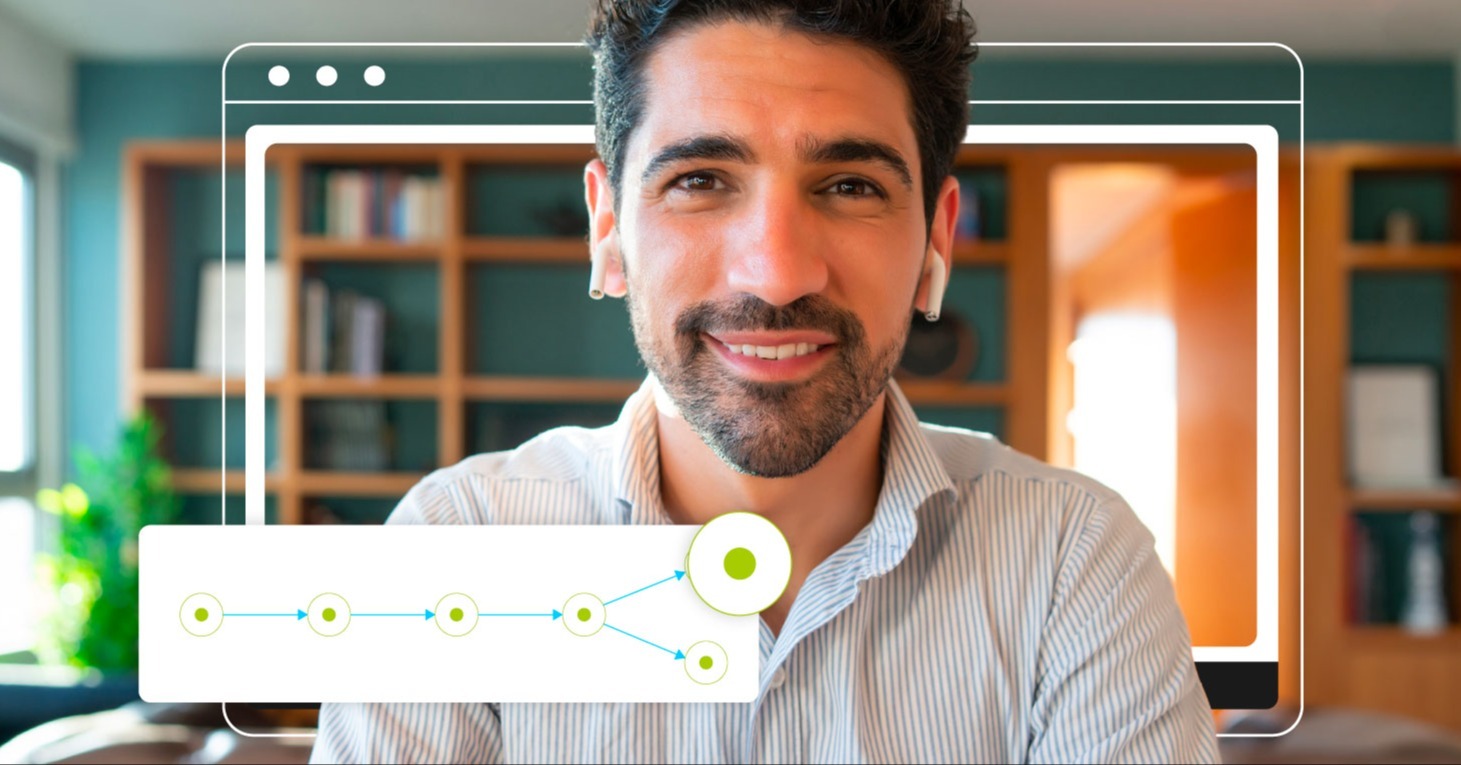
Adaptive learning sounds compelling in theory. But what does it actually look like in practice?
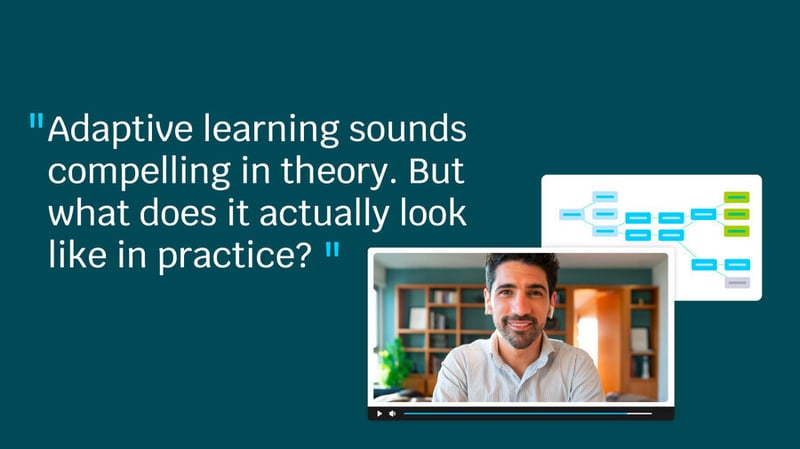
Seeing real examples—specific activities, platforms, and implementation approaches—helps organizations move from concept to execution.
When you see how adaptive learning works in actual training scenarios, the value becomes concrete.
For organizations evaluating skills training software or comparing adaptive learning software solutions, these examples illustrate what's possible and what to look for.
Let’s look at some examples of how adaptive learning platforms can help your organization enhance learning outcomes and create long-term training methods that scale.
Consider a healthcare organization training clinical staff on high-stakes patient conversations—delivering difficult diagnoses, navigating family discussions, or de-escalating emotional situations.
Traditional training might involve videos and role-playing exercises. Everyone receives the same content regardless of their starting proficiency.
An adaptive approach works differently.
Nurses engage in immersive simulations of patient conversations. The platform captures verified performance data during each scenario.
When someone struggles with a particular interaction type, the system adjusts their pathway—providing additional practice, alternative approaches, or prerequisite skill-building.
A nurse who excels at empathetic communication but struggles with delivering complex medical information receives targeted practice on explanation skills. Another nurse with the opposite profile follows a different pathway entirely.
This personalization accelerates development. Organizations consistently see 40% faster upskilling because training focuses on actual gaps rather than content learners have already mastered.
Adaptive learning encompasses various activity types, each serving different development needs:
Learners navigate scenarios where their choices lead to different outcomes. Each decision branches to consequences that mirror real-world situations. The system tracks performance patterns and adjusts subsequent scenarios accordingly.
These simulations develop judgment and decision-making, which are capabilities that traditional content delivery can't build.
Rather than fixed quizzes, adaptive assessments adjust in real time based on responses. Questions become more challenging as learners demonstrate mastery, or pivot to address gaps when struggles emerge.
This approach provides more accurate proficiency measurement while identifying specific development needs.
Based on assessment results and simulation performance, the platform serves targeted practice activities. Someone needing work on negotiation skills receives different exercises than someone developing coaching capabilities.
Some platforms adapt team-based activities by grouping learners with complementary strengths or similar development needs. This creates more effective peer learning experiences.
The common thread? Each activity responds to individual performance rather than following a fixed sequence. Verified skills data captured during these activities enables continuous pathway personalization.
Several platforms have built strong adaptive learning capabilities:
Combines AI-powered adaptive learning with immersive simulation training. Our platform captures verified skills data during realistic practice scenarios, enabling instant pathway personalization.
AI-powered authoring tools let organizations quickly create branching simulations—without technical expertise. Skillwell is an excellent simulation software for developing communication skills, leadership capabilities, and high-stakes decision-making.
Known for data-driven personalization, Knewton analyzes learner interactions and outcomes to customize learning experiences. Strong in academic and technical skill development.
Focuses on mathematics education with real-time adaptation to student responses. Demonstrates how adaptive technology ensures concept mastery before progression.
Offers comprehensive adaptive learning resources that adapt to learner performance. Broad content library across business and technical skills.
These platforms demonstrate that adaptive learning works across contexts—from K-12 education to corporate training. Organizations implementing adaptive approaches consistently achieve significant skill improvement, averaging 27% gains over traditional methods.
Organizations can leverage adaptive learning tools in several high-impact ways:
Instead of a generic orientation, adaptive assessment identifies what new hires already know and creates personalized 30-60-90 day pathways. Employees develop role-specific skills based on their backgrounds and demonstrated capabilities—accelerating time-to-productivity.
Adaptive platforms identify individual capability gaps and provide relevant training. Employees spend time on content they actually need rather than sitting through material they've already mastered.
Rather than checkbox completion, adaptive systems ensure employees can actually apply compliance requirements in realistic scenarios. Audit-ready documentation proves genuine competence.
Skills data analytics track how proficiency develops over time, informing both individual development plans and organizational workforce strategy.
The results are measurable. Organizations implementing adaptive approaches report significant reductions in training time while improving learning outcomes—because every minute of training targets actual development needs.
Adaptive learning transforms training from generic content delivery to personalized capability development. The examples above illustrate what's possible when technology responds to individual learner needs.
At Skillwell, we combine AI-powered adaptive learning with immersive simulation training. Learners practice in realistic scenarios while the platform personalizes their pathway based on verified performance data.
Ready to see how adaptive learning works? Explore how Skillwell creates personalized development experiences that build real workforce capability.
Here is the uncomfortable truth about AI in learning today: ...
Adaptive learning promises personalized pathways and measurable gains. Seasoned buyers know no technology arrives without ...
Remote and hybrid higher education changed what "hands-on" can mean.
Here is the uncomfortable truth about AI in learning today: ...
Adaptive learning promises personalized pathways and measurable gains. Seasoned buyers know no technology arrives without ...
Remote and hybrid higher education changed what "hands-on" can mean.