

Build Life Science Skills: Immersive & ...
Events
Discover how Skillwell helps companies like Merck and AstraZeneca build critical compliance and ...
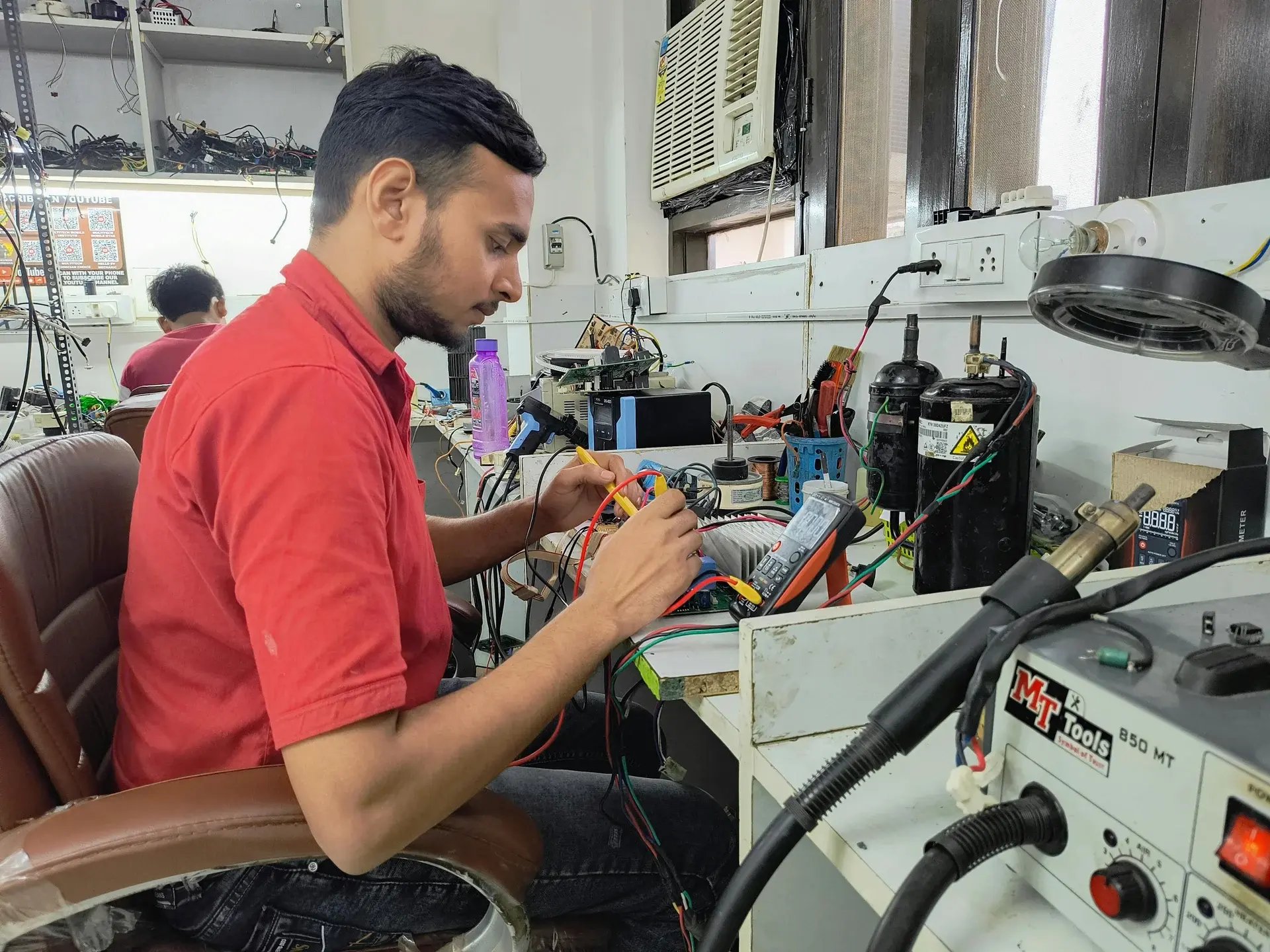
There’s no universal playbook for skills validation. What works in a technology company—certifications, coding challenges, platform assessments—looks very different from what’s required in a hospital or on a manufacturing floor.
But the underlying goal is the same across all of them: confirm that someone can actually perform the skills their role demands. The methods differ; the standard doesn’t.
Here’s a look at how skills validation approaches vary by industry, what drives those differences, and what resources support effective validation in each context.
Most validation frameworks draw on three core approaches—and the best programs typically combine all three rather than relying on any single method.
Written or digital assessments that measure knowledge and reasoning against a defined benchmark. These are scalable, easy to administer, and useful for establishing a baseline—but they measure what someone knows, not necessarily what they can do.
Credential-based validation tied to professional standards bodies or technology vendors. Certifications signal external recognition of competence and are particularly valued in technology, healthcare, and financial services, where third-party verification adds credibility.
Hands-on evaluation where a learner demonstrates a skill in action—operating equipment, responding to a scenario, completing a realistic task. Practical assessments produce the most direct evidence of competence and are most relevant in roles where execution matters more than recall.
The right mix depends on the role and the stakes involved. Higher-risk roles—patient care, financial compliance, equipment operation—benefit most from practical assessment, because a knowledge test alone isn’t sufficient proof of readiness.
Adaptive learning platforms can strengthen all three approaches by tracking how learners perform over time and surfacing the gaps that testing alone tends to miss.
The core principles—reliability, validity, fairness—apply everywhere. But how they’re expressed depends heavily on regulatory requirements, safety stakes, and how quickly skills change in a given field.
|
Industry |
Primary Methods |
Frequency |
Relative Emphasis |
|
IT / Tech |
Certifications, coding tests, platform assessments |
Ongoing; rapid skill evolution demands continuous re-validation |
High; skills endorsements gaining traction on professional platforms |
|
Healthcare |
Licensure exams, clinical assessments, simulation scenarios |
Mandatory; tied to patient safety and regulatory compliance |
Very High; digital and AI skills increasingly included in scope |
|
Manufacturing |
Practical machinery assessments, safety protocol checks |
Role-based; updated as equipment and processes change |
High; VR and simulation increasing validation fidelity |
|
Finance |
Standardized competency tests, regulatory certification exams |
Periodic; aligned with regulatory review cycles |
High; analytical and compliance skill validation core to hiring |
Tech moves fast. Skills that were current two years ago may already be outdated, which means validation in this sector is less about credentialing once and more about continuous reassessment.
Certifications matter—but so does demonstrated capability on the actual tools and platforms a team uses.
In healthcare, skills validation is a patient safety issue. Clinicians must pass rigorous assessments, maintain licensure, and increasingly demonstrate competence in digital and AI-adjacent skills.
The documentation requirements are substantial—and the bar for “competent” is set externally by regulators, not just by the organization.
Practical assessments dominate here. Can someone operate the equipment safely? Follow the right protocols?
Respond correctly when something goes wrong? Simulation-based training is increasingly used to replicate high-risk scenarios safely, giving assessors behavioral data they can’t get from a written test.
The best resources combine structured learning with realistic practice—because exposure to concepts alone doesn’t build the kind of competence that holds up under pressure.
For self-directed learning, platforms like Coursera, Pluralsight, and Udemy offer strong foundational content across technology, healthcare administration, and other fields. Certifications on these platforms provide external validation that complements internal assessment programs.
Workshops and cohort-based programs add the practice dimension: learners work through scenarios together, receive feedback, and develop skills through doing rather than watching.
For organizational training at scale, immersive simulation training provides something that self-directed courses can’t: a realistic environment where employees practice the specific scenarios their roles demand.
A healthcare team can work through difficult patient conversations.
A manufacturing team can practice safety decisions without real-world risk. The skills data captured during those simulations is more actionable than any course completion record.
The key is choosing resources that match how competence will actually be validated—and making sure practice mirrors the real demands of the job.
Every regulated or high-stakes industry uses some form of formal skills verification. A few examples:
Financial institutions validate analytical judgment, regulatory knowledge, and risk management skills. Compliance requirements drive much of this—employees need documented evidence of competence in areas that are subject to audit.
Skills data analytics help organizations track development across those competency areas over time.
Clinical competence is validated through licensure, certification, and increasingly through simulation-based assessment.
Documentation is non-negotiable—healthcare organizations need audit-ready records showing that their people have demonstrated the required competencies, not just completed a module.
Skills validation in tech often blends formal certifications with practical challenges—coding assessments, system design exercises, or scenario-based evaluations. The rapid pace of change means these assessments need to evolve alongside the skills they measure.
Across all three, the common thread is this: completion records alone aren’t enough.
Organizations that want to make confident decisions about hiring, development, and deployment need verified evidence that people can do the work.
Industry context shapes which validation methods make sense—but the goal is always the same: evidence of real competence, not just completed training.
Explore how Skillwell Verify helps organizations capture verified skills data that goes beyond checkboxes—giving L&D teams the visibility they need to act on actual capability.
The three most widely used approaches are standardized testing, industry certifications, and practical assessments—and most effective programs combine all three
Standardized tests establish baseline knowledge but don't measure practical performance
Certifications provide external, credential-based validation recognized by the industry
Practical assessments—including simulation-based scenarios—produce the most direct evidence of competence
The right mix depends on role complexity, regulatory requirements, and the stakes involved
Different industries face different regulatory requirements, safety standards, and skill-change cycles—a healthcare validation framework must satisfy patient safety regulations; a tech framework must keep pace with rapid platform evolution
Healthcare validation is heavily regulated and tied to licensure requirements
Technology validation must account for rapid skill obsolescence and ongoing reskilling
Manufacturing relies heavily on practical and safety-focused assessments
Finance emphasizes compliance documentation and risk management competencies
Yes—modern platforms make it possible to validate skills across large, distributed teams without sacrificing consistency or depth
AI-powered adaptive learning can personalize assessments to individual learner profiles
Simulation tools allow realistic, role-specific scenarios to be deployed at scale
Skills dashboards aggregate results across teams and surface gaps at the organizational level
Audit-ready records are generated automatically, reducing administrative burden
A skills verification test is typically an internal assessment designed by the organization to confirm competence in role-specific areas; a certification is externally issued by a standards body or vendor and signals broader, credentialed proficiency
Internal verification tests are more flexible and job-specific
Certifications carry external credibility and are portable across employers
Both can be used together: internal tests verify job readiness; certifications validate broader professional standing
Regulated industries often require both—internal validation plus documented external credentials
Discover how Skillwell helps companies like Merck and AstraZeneca build critical compliance and ...

Here is the uncomfortable truth about AI in learning today: ...
Adaptive learning promises personalized pathways and measurable gains. Seasoned buyers know no technology arrives without ...
Discover how Skillwell helps companies like Merck and AstraZeneca build critical compliance and ...
Here is the uncomfortable truth about AI in learning today: ...
Adaptive learning promises personalized pathways and measurable gains. Seasoned buyers know no technology arrives without ...