

Beyond the Content Explosion: What 17 ...
Blogs
Here is the uncomfortable truth about AI in learning today: ...
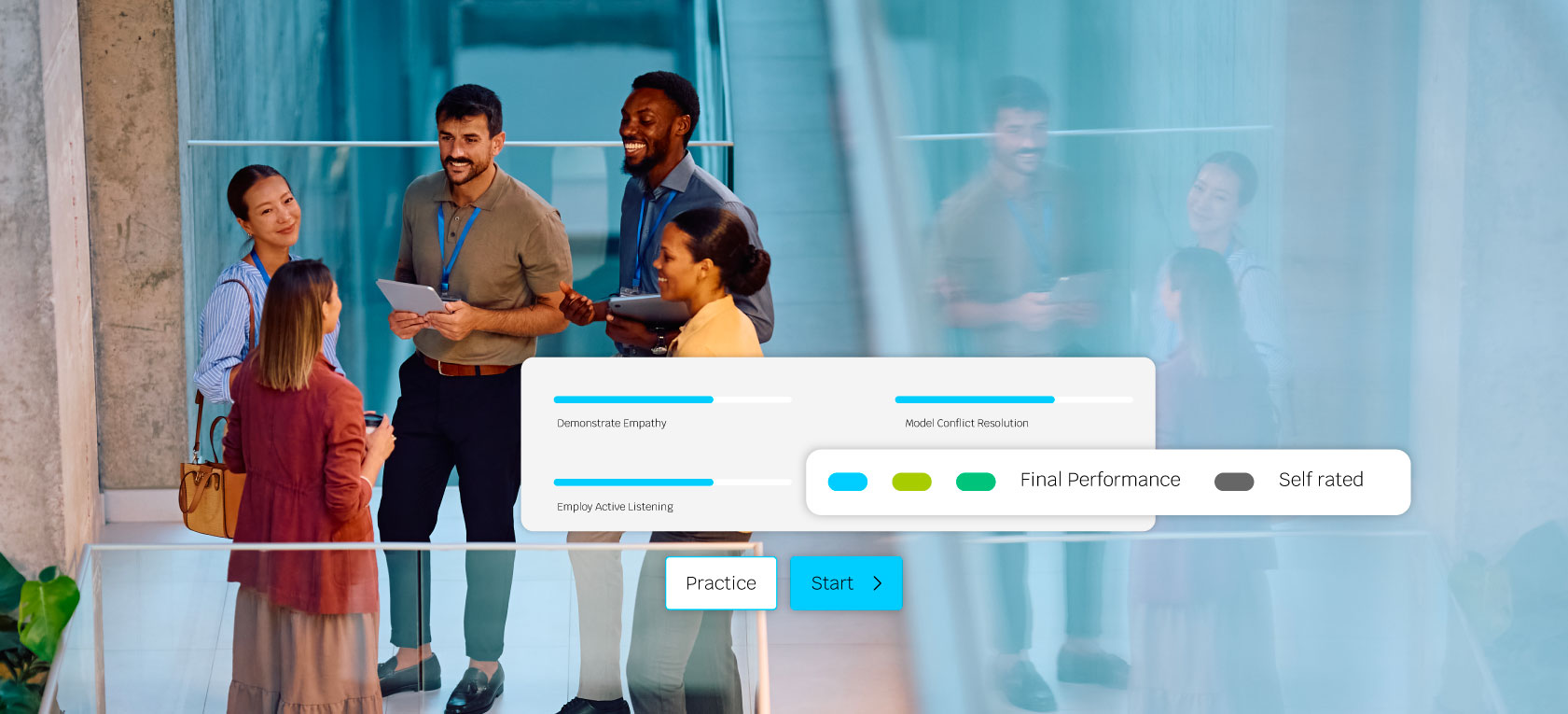
Strategic thinking isn't something you can learn from a textbook.
You can read about decision-making frameworks, study case studies, and memorize best practices.
But until you've actually navigated a complex situation—weighed trade-offs, made a call, and lived with the consequences—you haven't truly developed the skill.
Business simulation software provides that experience. It creates realistic scenarios where learners make decisions and see results unfold, all in environments where mistakes become lessons rather than liabilities.
But with many options available, how do you determine what's most effective for your needs? Let’s look at what business simulation is, what to look for in a good training simulation software platform, and how the leading options compare.
Business simulation is a training methodology that replicates real-world business scenarios in a controlled setting.
Participants make decisions—allocating resources, responding to market changes, managing teams—and see the consequences of their choices play out.
The purpose of business simulation? To bridge the gap between theory and practice. Understanding a concept intellectually is different from applying it under pressure.
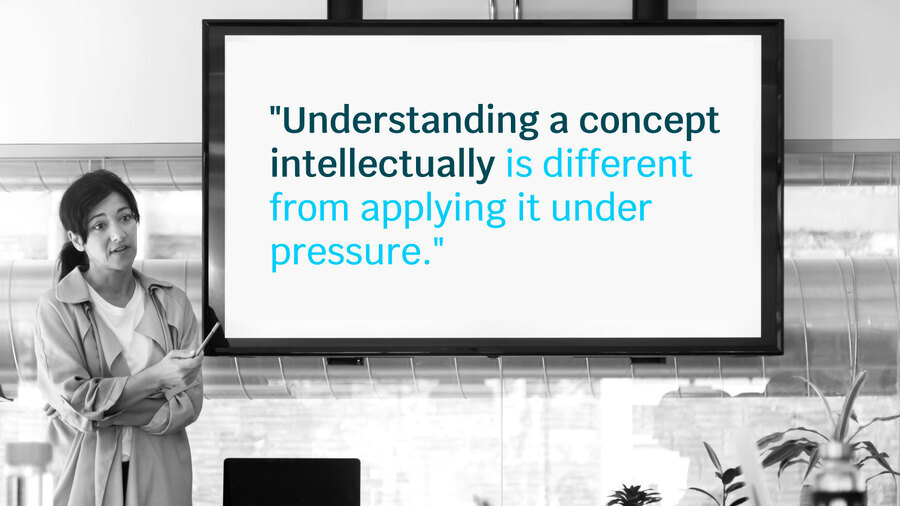 In short, simulations create the practice ground where application becomes instinct.
Different simulations focus on different skills:
Applications span from academic settings to corporate training programs, making simulations versatile tools for skill development at any career stage.
With AI-powered adaptive learning integration, modern simulations offer personalized pathways. Each participant's experience adjusts to their unique needs and current skill level, making training more efficient and relevant.
We’ve worked with many companies to show them just how powerful business simulation can be. In this scenario, participants managed a virtual company, making decisions on resource allocation, product development, and market entry strategies.
In the simulation, they faced realistic complications—competitive responses, supply disruptions, shifting customer preferences—that required adaptive thinking.
The immersive nature of the simulation provided something that case studies and lectures couldn't: the experience of actually making decisions and living with results.
What made it work? The scenarios felt authentic. Participants weren't gaming a system with obvious right answers—they were navigating genuine complexity where trade-offs were real, and consequences were meaningful.
The verified skills data captured during these simulations enabled personalized follow-up training. Participants who struggled with financial decisions got additional practice there; those who excelled moved on to more complex challenges.
Not all simulations deliver equal results. Here are the key features that separate effective platforms from mediocre ones:
An intuitive interface reduces friction and increases engagement. If participants spend their mental energy figuring out how to use the software, they have less attention for the actual learning.
Look for clean navigation and logical workflows that let users focus on decisions rather than mechanics.
The simulation should closely mimic real-world challenges. Sanitized scenarios with obvious answers don't build genuine capability—they teach people to game the system.
Effective simulations include ambiguity, competing priorities, and unexpected complications. They feel messy, just like real business situations.
Good simulations cater to different learning styles and skill levels. Look for platforms that offer varied pathways and scenarios to engage all participants appropriately.
Branching simulations generated via AI can create this variety quickly, requiring no technical expertise to implement. This flexibility keeps training relevant as needs evolve.
Effective simulations provide immediate feedback on decisions. Participants shouldn't wait until a debrief session to understand how they performed—they should see consequences unfold in real time.
This immediacy accelerates learning by tightening the loop between action and result.
Robust analytics help track progress and skill development. Look for platforms that provide:
This data supports audit-ready, evidence-based records that prove competence—valuable for both compliance requirements and development planning.
These features collectively determine whether a simulation delivers real skill development or just an engaging experience that doesn't translate to performance.
"Best" depends on your specific needs, but here's how leading options compare:
We’ve become known for our unique combination of AI-powered adaptive learning and immersive simulation training. Skillwell allows you to create branching simulations in minutes without technical expertise, plus adaptive, assessment-driven onboarding that creates personalized 30-60-90-day development pathways.
Recognized for its user-friendly interface and powerful analytics capabilities. Simul8 works well for organizations focused on operational efficiency and process optimization. Strong visualization features make complex scenarios accessible.
Primarily designed for academic institutions, Capsim offers a comprehensive suite of business scenarios spanning multiple disciplines. Popular in MBA programs and undergraduate business education for its breadth of coverage.
A versatile platform supporting marketing and management simulations across various industries. Offers flexibility for organizations with diverse training needs and departments with different focus areas.
Popular in educational settings, BizCafe focuses on restaurant management simulation. Its blend of engagement and learning makes it particularly effective for introducing business concepts to students new to the field.
Take time to evaluate options against your specific requirements. A platform that's perfect for one organization may be wrong for another.
Each platform has distinct strengths. The best choice depends on:
Take time to evaluate options against your specific requirements. A platform that's perfect for one organization may be wrong for another.
Remember, generic "best" rankings matter less than fit. A technically sophisticated platform that frustrates your users delivers worse results than a simpler tool they actually engage with.
Start by clarifying your objectives. What decisions should people practice making? What skills need development? How will you measure success?
Then evaluate platforms against those specific criteria.
Business simulation transforms how organizations develop strategic thinking and decision-making skills. Instead of hoping knowledge translates to capability, you give people actual practice with realistic challenges.
Explore how Skillwell combines AI-powered adaptive learning with immersive simulation to create personalized, effective development experiences that deliver measurable results.
Here is the uncomfortable truth about AI in learning today: ...
Adaptive learning promises personalized pathways and measurable gains. Seasoned buyers know no technology arrives without ...
Remote and hybrid higher education changed what "hands-on" can mean.
Here is the uncomfortable truth about AI in learning today: ...
Adaptive learning promises personalized pathways and measurable gains. Seasoned buyers know no technology arrives without ...
Remote and hybrid higher education changed what "hands-on" can mean.