Skip to content
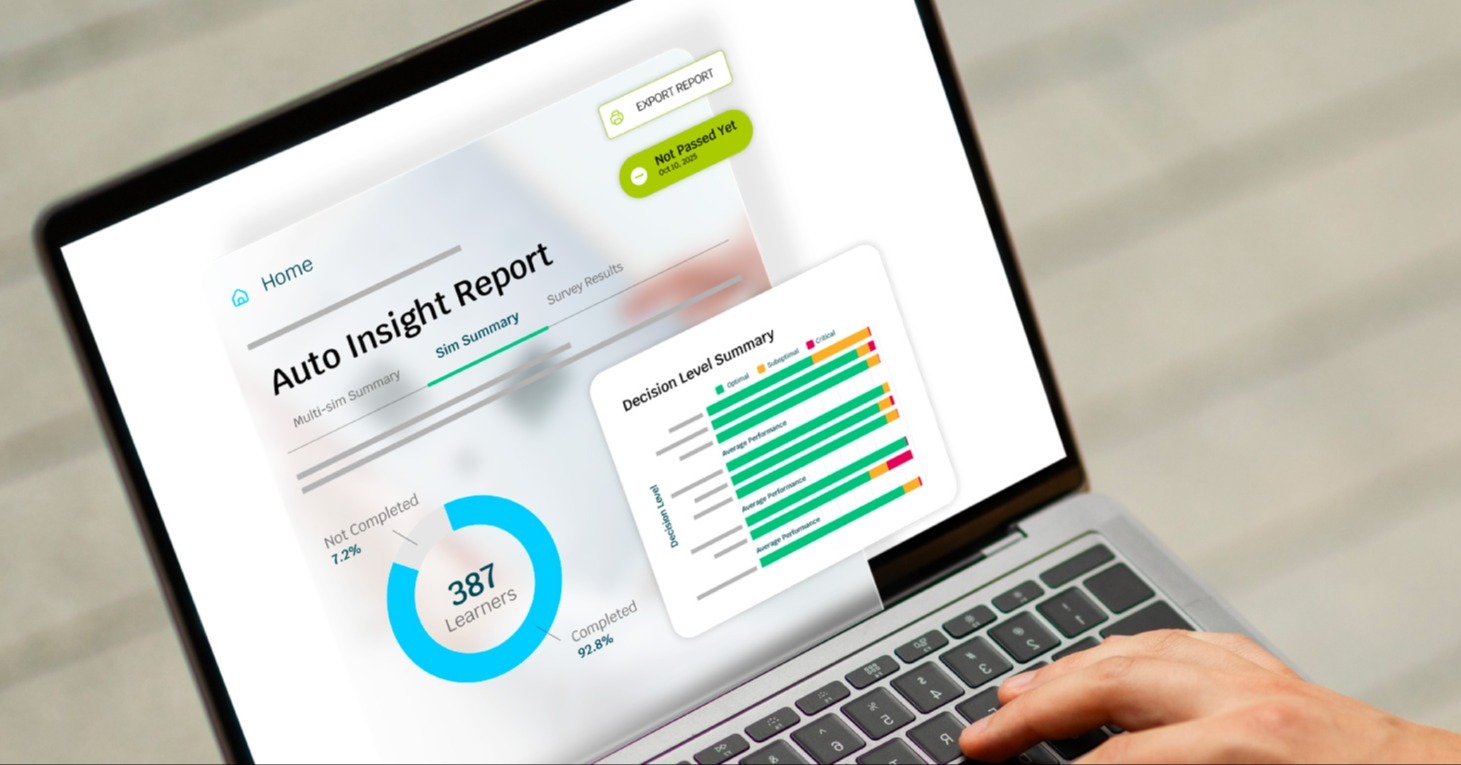
A laptop screen showing a simulation report of the best training software
Blogs

What is the Best Training Software?

There's no shortage of training software on the market. 

The challenge isn't finding options—it's finding the right fit for what you're actually trying to accomplish.

Think through the various needs that a particular tool may deliver:

  • Do you need to manage and track training at scale?
  • Deliver immersive skill-building experiences?
  • Personalize learning for individual employees?

Different tools excel at different things, and the best training software depends on your specific goals.

Let’s look at how to choose the best corporate training software, and learn how you can build a training technology stack that actually works.

What is the Best Software for Training?

Training software is a broad category covering any digital solution that facilitates learning and development. Understanding the main types helps you identify what you need.

Learning Management Systems (LMS)

These platforms centralize training materials and track employee progress. An LMS manages the logistics of training—who needs what, who completed what, and when certifications expire. It's the administrative backbone of most corporate training programs.

Simulation software

These tools create immersive environments for realistic practice. Employees don't just learn about handling situations—they actually handle them in controlled settings. Training simulation software focuses on building practical skills through experience.

Assessment tools

These measure employee skills and learning outcomes. They help identify gaps and verify that training achieved its objectives.

Here's the key insight: these tools serve different purposes and work best together. An LMS manages and tracks learning. Simulation software creates the learning experience itself. Assessment tools measure the results.

Top Features to Evaluate

When comparing the best corporate training software, look for:

  • User-friendly interface. If the software frustrates users, they'll disengage regardless of content quality. Ease of use matters for both administrators and learners.
  • Scalability. Can the platform grow with your organization? Training 100 employees requires different infrastructure than training 10,000.
  • Analytics and reporting. What insights can you extract? Look for platforms that surface actionable data about learner progress and program effectiveness.
  • Customization options. Generic training produces generic results. The ability to tailor content to your specific context increases relevance and impact.
  • Integration capabilities. Does it connect with your existing HR systems, content libraries, and business tools? Isolated platforms create data silos and administrative headaches.

AI-powered adaptive learning adds another dimension. By leveraging verified skills data captured during training, organizations can personalize learning pathways for each employee—ensuring training stays relevant and appropriately challenging.

AI is no longer the future of corporate training—it's the present. Organizations embracing it are already seeing results.

What is the Best Software for Simulation?

Simulation software deserves special attention because it addresses something other training tools can't: building practical skills through realistic practice.

Why? Because some skills can't be learned from videos or documents. They require experience—making decisions under pressure, handling unexpected situations, and recovering from mistakes.
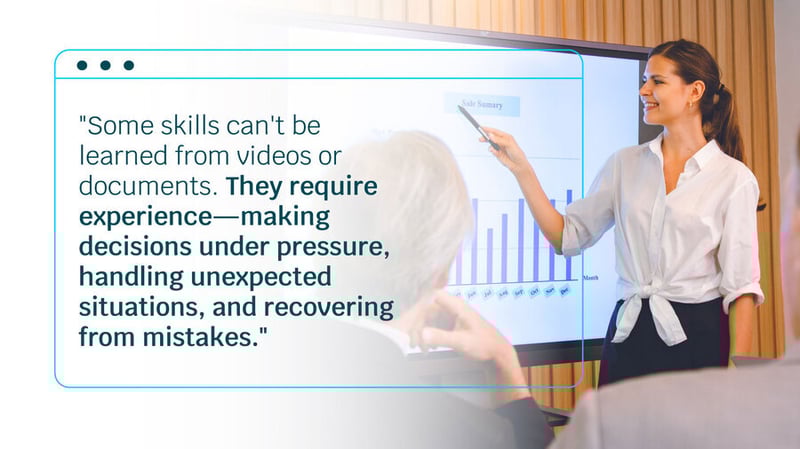
pull quote of article text

But in many fields, the cost of learning through real-world mistakes is too high. Healthcare workers can't practice on real patients. Sales teams shouldn't fumble through their first difficult negotiations with actual prospects.

Simulation creates practice environments where experience accumulates without real consequences.

What are the Top Simulation Platforms?

Skillwell

Combines AI-powered adaptive learning with immersive simulation training. Creates branching simulations in minutes without technical expertise, making it accessible for organizations that need rapid scenario development.

AnyLogic

A multimethod simulation modeling tool supporting agent-based, discrete event, and system dynamics approaches. Used across industries to simulate markets, healthcare systems, manufacturing processes, and supply chains.

Vortex Studio

A platform featuring real-time physics simulation for operator training, mission planning, and product validation. Strong for scenarios requiring physical realism.

What are the Benefits of Simulation-Based Training?

Enhanced retention. People remember what they do far better than what they read or watch. Active practice creates lasting capability.

  • Immediate feedback. Learners see consequences of their decisions in real time, allowing continuous adjustment and improvement.
  • Safe learning environment. Employees practice critical skills without fear of real-world repercussions. Mistakes become learning opportunities.
  • Verified skill development. Simulation captures evidence of demonstrated competence—not just completion, but actual performance in realistic scenarios.

The ability to generate branching simulations in minutes via AI—without technical expertise—makes simulation software increasingly accessible. Skillwell is designed to make this process easy and intuitive.

For organizations seeking the best training simulation software for employees, these capabilities transform what's possible in skill development.
What is the Best Software for Large Group Training?

Training large groups presents unique challenges. Logistics get complex. Learner needs vary widely. Engagement becomes harder to maintain.

The right software addresses these challenges systematically.

Key Features to Look For:

  • Scalability. This seems obvious, but matters enormously. Can the platform accommodate hundreds or thousands of simultaneous users without performance degradation?
  • User management. Administering large groups requires robust tools for enrollment, assignment, and progress tracking. Manual processes break down at scale.
  • Interactive elements. Large group training risks becoming passive—people tuning out while the content plays. Features like polls, quizzes, breakout sessions, and discussion tools maintain engagement.
  • Consistent delivery. Employees across different locations and time zones should receive equivalent experiences. The platform needs to standardize what can be standardized.

Platforms for Large-Scale Training

  • Adobe Captivate. Offers scalable e-learning development and delivery. Strong for organizations creating substantial custom content for large audiences.
  • Webex Training. Provides virtual training capabilities with interactive features for live sessions. Good for organizations that need synchronous large-group experiences.
  • Enterprise LMS platforms. Solutions like Cornerstone, SAP SuccessFactors, and Workday Learning handle large-scale training administration with robust user management.

The best approach for large groups often combines platforms: an LMS for management and tracking, simulation software for skill-building experiences, and virtual classroom tools for live sessions.

Adaptive assessment-driven onboarding creates personalized 30-60-90 day journeys even at scale—ensuring new hires across the organization receive relevant, individualized development paths.

What is the Best Software for Training Individuals?

Individual training requires different capabilities than group training. Personalization becomes paramount. Self-paced flexibility matters. Progress tracking needs granularity.

Key Features for Individual Learning

  • Personalization. Content should adapt to individual learning styles, current skill levels, and development objectives. One-size-fits-all training wastes time on content people don't need while skipping content they do.
  • Progress tracking. Detailed visibility into individual performance helps both learners and managers identify strengths and gaps. The best employee training tracking software surfaces this information clearly.
  • Flexible learning pathways. Individuals should be able to learn at their own pace, focusing time where they need it most. Rigid sequences frustrate advanced learners and overwhelm struggling ones.
  • Self-directed options. Beyond assigned training, employees benefit from accessible libraries where they can pursue development interests independently.

Platforms for Individual Development

  • Skillwell. Creates personalized pathways using verified skills data, adapting experiences based on demonstrated performance rather than just preferences.
  • Skillsoft. Offers extensive content libraries with personalized learning experiences and robust tracking capabilities.
  • Docebo. Provides an intuitive interface for individual learners with strong analytics for administrators.
  • LinkedIn Learning. Accessible library approach that integrates with professional development goals.

The right software empowers employees to take ownership of their development while giving organizations visibility into skill growth across the workforce.

Audit-ready, evidence-based records proving competence add value for compliance requirements—documenting not just that training occurred, but that skills actually developed.

Building Your Training Technology Stack

The best training software isn't a single platform—it's a combination that addresses your specific needs.

  • For managing and tracking: An LMS provides the administrative backbone, handling enrollment, completion tracking, compliance documentation, and reporting.
  • For skill-building: Simulation software creates the immersive experiences that develop practical capability through realistic practice.
  • For personalization: AI-powered adaptive learning tailors experiences to individual needs, making training more efficient and effective.
  • For scale: Enterprise platforms handle the logistics of training large, distributed workforces consistently.
These tools work together. The LMS tracks that training happened. Simulations ensure training actually builds skills.

Adaptive learning keeps everything relevant to individual needs.

Ready to Enhance Your Training? Try Skillwell Now!

The best training software is the combination that fits your goals, your learners, and your organization. Generic solutions produce generic results.

Explore how Skillwell integrates AI-powered adaptive learning with immersive simulation training—creating personalized, effective development experiences that build real skills and provide documented evidence of competence.

Take A Tour of Skillwell's Capabilities Now

Related insights

A male student focused on a laptop screen that displays the final stage of a vocational skills training program.

What Is a Vocational Skills Training ...

Blogs

Not every career path runs through a four-year degree. Skilled trades, healthcare support roles, technical positions, and ...

Learn more
A laptop screen showing a skills training course with a virtual coach speaking

What Are Skills Training Courses?

Blogs

The gap between what employees know and what they can do costs organizations more than most realize. Traditional training ...

Learn more
A happy student after completing his online training on employable skills

What Are Generic Skills in the Context ...

Blogs

Employers consistently say the same thing: graduates have technical knowledge but lack the broader capabilities that actually ...

Learn more
A male student focused on a laptop screen that displays the final stage of a vocational skills training program.

What Is a Vocational Skills Training ...

Blogs

Not every career path runs through a four-year degree. Skilled trades, healthcare support roles, technical positions, and ...

Learn more
A laptop screen showing a skills training course with a virtual coach speaking

What Are Skills Training Courses?

Blogs

The gap between what employees know and what they can do costs organizations more than most realize. Traditional training ...

Learn more
A happy student after completing his online training on employable skills

What Are Generic Skills in the Context ...

Blogs

Employers consistently say the same thing: graduates have technical knowledge but lack the broader capabilities that actually ...

Learn more