

Build Life Science Skills: Immersive & ...
Events
Discover how Skillwell helps companies like Merck and AstraZeneca build critical compliance and ...
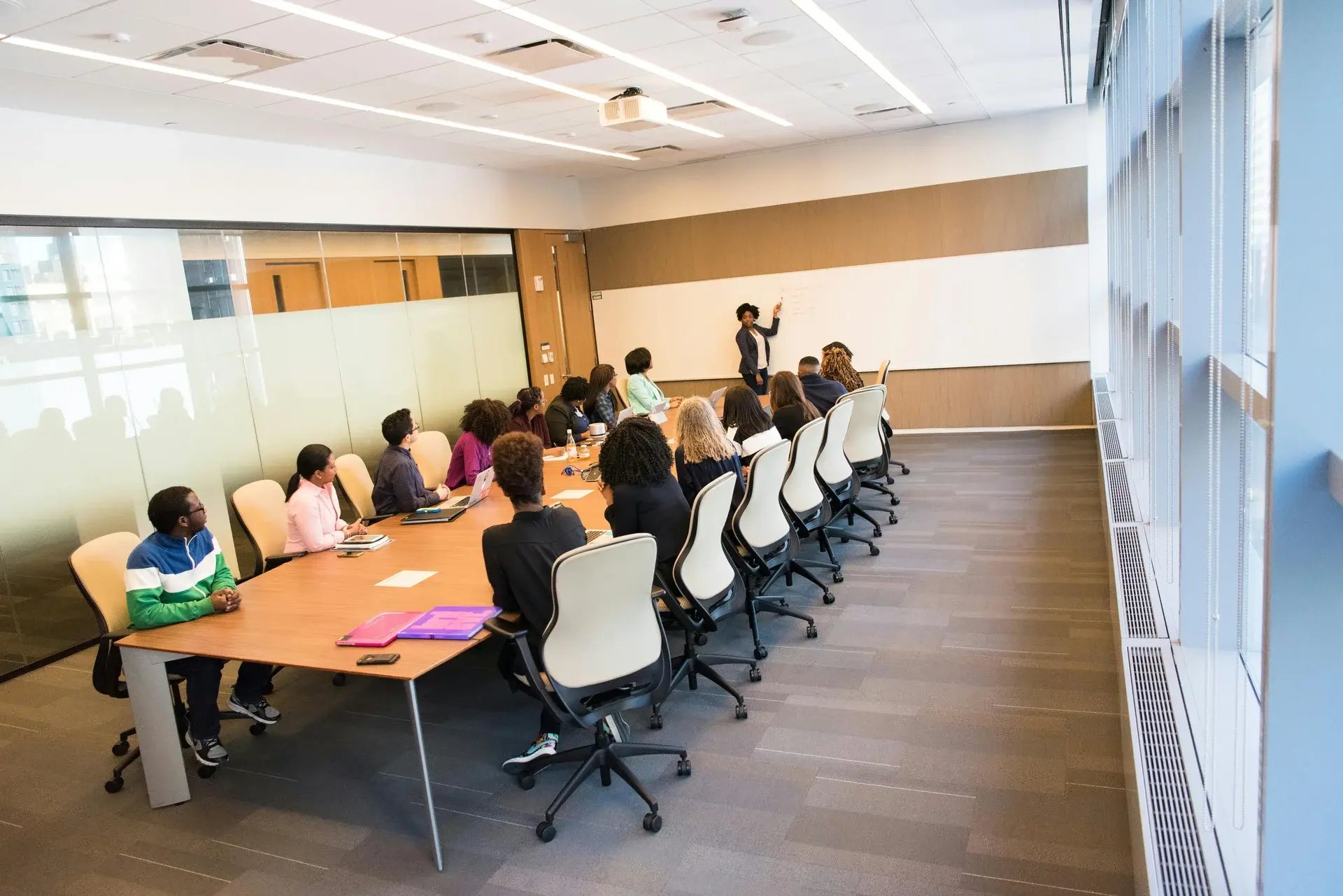
The gap between how training is typically delivered and how people actually learn creates a predictable problem: disengagement. When content doesn’t match a learner’s pace, knowledge level, or preferred modality, attention drifts—and outcomes suffer.
Adaptive teaching addresses this by adjusting instruction in real time based on what each learner demonstrates.
It’s not a single method but a set of principles that, when applied consistently, produce measurable improvements in both engagement and skill development. Here’s how adaptive learning works and what the evidence shows.
Adaptive teaching is an instructional approach that adjusts methods and resources based on the diverse needs, skills, and learning patterns of students.
At its core is a straightforward idea: learners are not a monolithic group, and instruction that ignores their differences will always underperform instruction that accounts for them.
Three principles define the approach.
Personalization means tailoring content to address individual strengths and weaknesses—not just offering different difficulty levels, but genuinely adapting the learning pathway.
Flexibility means modifying strategies in real time based on how learners respond, rather than following a rigid curriculum regardless of outcomes.
Continuous feedback means using ongoing assessment data to inform every instructional adjustment, creating a loop where the teaching gets more precise as more data comes in.
In practice, adaptive teaching increasingly relies on technology to operate at scale. An AI-powered adaptive engine can apply these principles across hundreds of learners simultaneously—something no individual instructor could manage manually.
The relationship between adaptive teaching and increased engagement is well-documented. When students feel that their unique needs are being met, the dynamic shifts—they stop being passive recipients of information and start actively owning their learning.
Research bears this out: 75% of students reported higher motivation in adaptive environments, compared to just 30% in traditional classrooms.
The outcomes extend beyond engagement. Students in adaptive learning environments consistently demonstrate stronger retention, sharper critical thinking, and better assessment performance.
A study found that adaptive learning increased academic performance in 59% of the studies examined—a meaningful signal given the range of contexts and implementations those studies covered.
The mechanism is straightforward: when learners spend their time on material that’s actually relevant to their gaps—rather than reviewing content they’ve already mastered or struggling with material they’re not ready for—every minute of training becomes more productive.
Organizations using this approach have seen 40% faster upskilling and a 27% average improvement in skill mastery, turning engagement gains into measurable workforce outcomes.
The evidence consistently says yes—and the reasons go deeper than just “better content.” Adaptive teaching taps into several psychological drivers that keep learners invested.
Autonomy. Learners feel empowered when the system responds to their performance rather than forcing them through a predetermined sequence. That sense of agency—of having some control over the pace and direction of learning—is one of the strongest predictors of sustained engagement.
Relevance. When content connects to what a learner actually needs to improve, it feels less like mandatory training and more like a tool that’s helping them get better at their job. Adaptive systems maintain this relevance continuously by adjusting what comes next based on demonstrated performance.
Immediate feedback. Real-time assessment provides a constant sense of progress. Learners know where they stand, what they’ve mastered, and where they need more work—without waiting for an end-of-course report that arrives too late to be useful.
Combined with immersive simulations that provide realistic practice environments, this feedback loop keeps learners actively engaged rather than passively consuming content.
Consider a sales team onboarding program where new hires arrive with vastly different experience levels.
In a traditional program, everyone sits through the same four-week curriculum. Some reps spend days on material they learned at their last company; others rush past fundamentals they actually needed.
In an adaptive version, the system assesses each rep’s existing knowledge at the start. A ten-year sales veteran might skip foundational selling skills entirely and move straight to product-specific scenarios, while a career-changer gets additional time on consultative selling fundamentals.
Both reps then practice in branching simulations that adapt based on their choices—adjusting scenario complexity, introducing harder objections, or routing them back to reinforcement when they struggle.
The result is that both reps reach readiness faster, with verified evidence of their capabilities rather than a simple completion record.
This is adaptive teaching in action: different paths to the same competency standard, shaped by individual data rather than assumptions. For more on how instructors can apply these principles effectively, explore strategies for using adaptive learning in structured programs.
Adaptive teaching works because it treats each learner as an individual—but delivering that at scale requires the right platform.
Skillwell combines AI-powered adaptive pathways with immersive simulation training to personalize every learning experience, producing verified skills data that proves competence rather than just tracking completion.
See How Skillwell Drives Engagement and Outcomes
Adaptive teaching uses technology and real-time data to adjust instruction automatically and continuously. Differentiated instruction typically relies on the educator to manually modify content and strategies based on observation.
Both approaches share the goal of meeting diverse learner needs, but adaptive teaching scales more effectively because the system handles individual adjustments that would be impossible for one instructor to manage across a large group.
Yes—compliance training is actually one of the strongest use cases. The goal of compliance training isn’t just completion but demonstrated understanding of how to apply rules in real situations.
Adaptive systems ensure that employees who already understand the material move through efficiently, while those who need more reinforcement get it. Combined with simulation-based assessment, this produces audit-ready evidence of competence.
Results vary by implementation, but organizations using well-designed adaptive programs have reported 40% faster upskilling, a 27% average improvement in skill mastery, and significant increases in learner engagement and satisfaction.
The key variable is how deeply the adaptive engine personalizes the experience. Basic branching produces modest gains. Continuous, AI-driven adaptation that builds individual learner models produces substantially stronger outcomes.
Discover how Skillwell helps companies like Merck and AstraZeneca build critical compliance and ...

Here is the uncomfortable truth about AI in learning today: ...
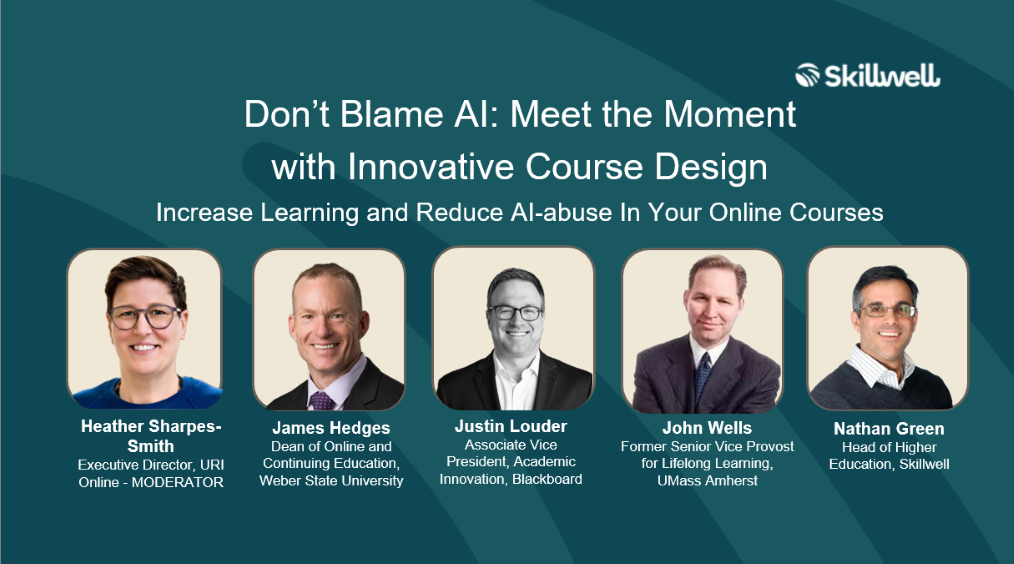
Join our webinar panel discussion to learn how to use formative and immersive elements to increase learning and reduce ...
Discover how Skillwell helps companies like Merck and AstraZeneca build critical compliance and ...
Here is the uncomfortable truth about AI in learning today: ...
Join our webinar panel discussion to learn how to use formative and immersive elements to increase learning and reduce ...